2024: A Financial Year Wrapped Up
When we look at the calendar, the year almost feels like a daydream—only a handful of days left, yet we’re already ready to recap what 2024 delivered for investors.
Overall Market Pulse
Long story short: most people rode a pretty sweet wave. Global indices kissed the upside, and crypto—especially Bitcoin—sailed into a new high.
The Big Players
- US’s S&P 500 rose an impressive 24% from January, beating the long‑term average of ~10% per year. Over the last two years it’s seen a 45% leap; those who jumped in recently tasted real gains.
- NASDAQ, the tech powerhouse, strutted ahead with a 26% climb.
- Europe had its own story: DAX (Germany) +20%, FTSE (UK) +6%, CAC‑40 (France) dipped ~2% because of domestic and global hiccups.
- Asia was no slouch either: Japanese Nikkei +16% and places in China matched that upward rhythm.
- The Global Composite Index, which weighted the US roughly two‑thirds of its total, sparkled with a solid 17% jump.
Cryptocurrency Crown
Bitcoin didn’t just grow; it sky‑rocked 140%. The catalyst? A combination of the 2024 halving, fresh spot‑ETF approvals, and a crypto‑friendly presidential win. It’s a headline that made even seasoned traders grin.
Valuation Vibes: Are Stocks Expensive?
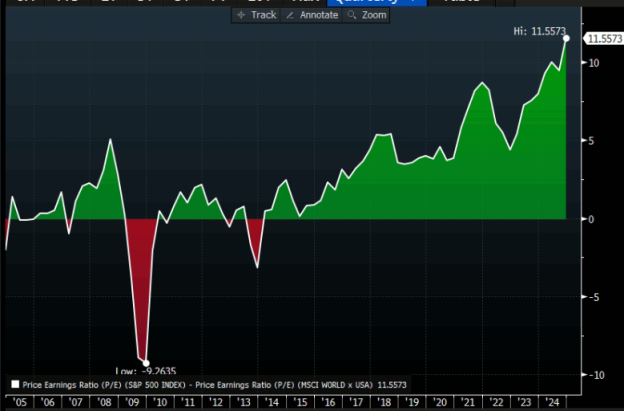
The key metric, the P/E ratio—price over earnings—helps us gauge how pricey the market feels. For the S&P 500, it sits at 26× earnings today.
- Throw out the Covid‑era distortions and the last time we saw such a lofty figure was about 25 years ago during the dot‑com bubble.
- In other words, US stocks are in the high‑price club—prices are at an all‑time high over the last quarter‑century.
- Pull the US out of the mix, and the rest of the world spawns a 15× earnings P/E, roughly in line with the decade’s average.
Bottom line: America’s valuations are Houdini‑high, while the rest of the globe stays on a steadier, long‑term track.
That’s the snapshot. 2024 was a good year for many, but remember—prices are high, markets can shift, and your next move matters.
Why the U.S. Market Feels Like a Billion-Dollar Spa
Ever wondered why the wall‑street ticker feels like a luxury spa bill? It’s all about profit—the more companies can sell and the bigger the future earnings buzz, the more pricey the shares get.
Profit Gains: 9.5% vs. 8.5%
The S&P 500’s underlying earnings are on the rise at 9.5% this year—up from 8.5% last year. That’s a good sign, but not keeping pace with the surge in share prices.
AI Mania: The Friday Night Fun of the Market
For the past two years, AI has been the DJ spinning the heartbeat of U.S. equities. Tech giants—Nvidia, Alphabet, Microsoft, Amazon, Tesla—are getting the VIP treatment, with valuations soaring on the promise of future sales and profit.
- AI is branded as a once‑in‑a‑generation opportunity.
- Think of it as the “Internet” of the 2020s, with each company dumping hundreds of billions into servers and chips.
- If AI pan out, the lofty prices may be justified.
- If the road gets bumpy, you’re just looking at expensive stocks.
Donald Trump’s Daylight Savings: Election Boost
Trump’s re‑election nudged the charts up—more business‑friendly policies, tax cuts, and a vibe of “let’s get rich.”
What Expensive Markets Mean for the Everyday Investor
Predicting the next move purely on gut is risky. Instead, let’s look at a few data points that can hint at what’s coming.
- Two consecutive years of sky‑high growth are rare—and usually followed by softer years.
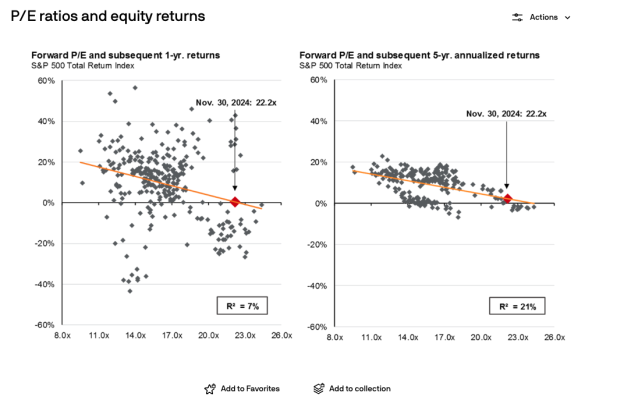
- High valuations often translate to slightly negative returns over 5‑10 years.
- Historically, expensive markets bring about zero or 1‑2% annual returns in the next five years.
A Word from JP Morgan
JP Morgan took the data‑sauce-and‑stirred approach, looking at expected profits, and concluded that an expensive market usually drives weaker returns—about zero over a one‑year horizon, and around 1‑2% over five.
Bottom line: Sit tight. The next few years will shed light on whether those AI‑driven valuations are justified—or just a bubble in the making.
Guide to the Markets
We’ve all heard the gut‑busting headlines about booming returns. Turns out, the next decade might actually be a bit shy compared to the roaring past ten. Even the big names in banking are brushing up their crystal balls, and the forecasts are showing a slimmer slide.
- Goldman Sachs is pitching an average 3% annual return for the next ten years.
- JP Morgan thinks you’ll see about 6% per year.
It’s wild to think banks can even guess the stock market’s mood swings—after all, who’s to say how AI‑powered tech giants will play the long game? But the bottom line? The sky‑high gains we’re used to aren’t guaranteed to be a yearly norm for the next decade.
Time is the only referee here. The real beauty of a long‑term stance is that, even when markets feel like they’re popping from a soda can, a 20‑30 year horizon usually draws in a fairly decent return (that’s the 100‑years‑plus data talking, literally).
Bottom‑Line Strategy
For most of us who can afford a marathon view, the safest play is simple: keep buying low‑cost ETF funds and ride the tech/eco wave that society is heading into. That’s the recipe I keep cooking up.
Stay in the loop! Grab real‑time updates on this topic straight to your device—just hit Subscribe now.