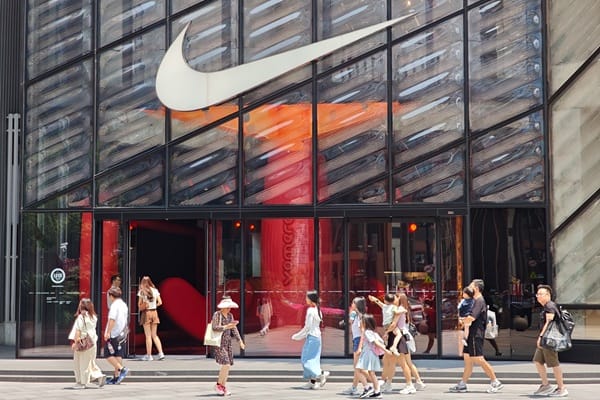
Following the release of its fiscal fourth quarter and full year earnings results last week, Nike saw its share price surge by more than 10%.
|
<!–
–> |
This came despite the company reporting its lowest revenue figures since Q3 2022, with investors displaying confidence in the global footwear and apparel giant’s turnaround strategy.
Nevertheless, the most newsworthy item to emerge from Nike’s earnings was the admission that President Trump’s tariffs could add $1 billion to the company’s costs.
Kate Leaman, chief market analyst at AvaTrade said, “Nike’s latest earnings told two stories at once. Revenue fell, yet profits still topped estimates, and the stock surged.
“It’s a paradox we’ll likely see repeated across global brands in the coming quarters – while consumers are still spending, especially on iconic names, the ground beneath multinational businesses is shifting fast.
“Nike’s revelation of a potential $1 billion tariff hit this year is a flashing red warning for the entire apparel and footwear sector. No longer can companies assume cheap, seamless manufacturing in China is a forever solution. The geopolitical tides have turned.
“Brands are now paying the price for decades of supply chains optimised purely for cost.
“A shift out of China is underway, but it’s neither cheap nor quick. Moving operations to Vietnam, Indonesia, or Cambodia takes time, money, and hard-earned trust with suppliers.
“In the near term, Nike’s resilience is encouraging. But as an investor, it’s worth asking: what happens if tariffs extend to nations in southeast Asia or further deepen on Chinese goods? For a company still relying on Asia for the bulk of its manufacturing, the potential downside is non-trivial.
“For investors, several implications stand out: margins will be under sustained pressure, inventory management and working capital will become more volatile, and, perhaps most importantly, valuation multiples will increasingly bifurcate between brands that can command pricing power and those that can’t.
“Nike’s playbook is revealing – it’s betting on pricing power, premium products, and relentless innovation to offset higher costs. Not every brand has that luxury. But those that do will wield it like a shield in turbulent markets.
“For all brands, the new normal will likely be a business environment where they must be geopolitical strategists as much as product innovators. Margins will tighten. Supply chains will fragment. Some companies will thrive on agility and brand strength; others forced into costly reinventions – or risk irrelevance.”
Get real time update about this post category directly on your device, subscribe now.