Bernanke’s Big BoE Review: A Game-Changer for the Bank of England
On Friday, former Federal Reserve Chair Ben Bernanke dropped an almost-year-long review that could shake up the Bank of England’s (BoE) forecasting style. His analysis focuses on how the BoE can tweak its tactics to back the Monetary Policy Committee (MPC) better, especially when uncertainty is at an all‑time high.
What’s the Verdict?
Bernanke’s review boils down to three key points that look set to transform the MPC’s approach:
- Publish the future interest‑rate path. Instead of juggling two frayed curves—one from the market and a flat “constant” line—he suggests a clear forecast of where rates will head.
- Leverage economic scenarios. Move beyond the old “fan charts” to a set of plausible scenes that explain why things might swing wildly.
- Let BoE staff run the forecast engine. The MPC should drop the “best collective judgement” mantra and let internal experts print the numbers.
Why the Shake‑Up Works
The post‑COVID inflation surge exposed cracks in the BoE’s predictions. Inaccurate forecasts, coupled with communication mishaps (remember Governor Bailey’s “don’t ask for a pay rise” quip), eroded credibility. While the BoE was on par with its G10 peers, it’s clear the bank wants to re‑take control of the inflation narrative.
The OSCILLATING Forecast Problem
For the last two years, the MPC has swung between a flat-rate buildup and a market‑driven path. The result? Inflation estimates were consistently low as prices shot up, only to flare upward right after the CPI peak in late 2022. But the real bug was deeper:
- The MPC’s own view on the future rate was never straightforward—everyone had to piece it together by comparing the two forecast routes.
- During turbulent times (post‑Brexit, the 2022 “mini‑budget” fiasco), the MPC actually rejected their own forecasts because of volatile rate markets.
Flying a “one‑meeting‑at‑a‑time” style and sticking to fan charts also made it easy for the MPC to avoid telling the public how confident they truly were. Those charts—spanning from outright deflation to 4% inflation in three years—created more confusion than clarity.
Rounding It Up with Scenario Analysis
Solution? The MPC should publish a handful of coherent scenarios: a base case and a few helpful alternatives. The scenarios should come from the MPC’s preferred rate path, not a market plot. This approach aligns with Sweden’s Riksbank model: the BoE staff would crunch the numbers, leaving the MPC to decide what should happen if each scenario hits the mark.
What About a Dot Plot?
Some would ask whether Bernanke wants the BoE to adopt a “dot plot” like the Fed. Given the MPC’s smaller size (nine members versus the Fed’s 19) and a certain “we don’t need this” vibe from leaders like Governor Bailey, a dot plot seems unlikely. Nonetheless, the idea is familiar—just not as essential this time.
Will the Market End Up Caressing the Price of GBP?
In the short run, the review’s impact on the pound or gilts is expected to be mild. The recommendations are non‑binding, and implementation could take 9‑12 months to fully tip the scales.
In short: Bernanke’s review signals a horizon change for the MPC—clearer forecasts, more robust scenarios, and a shift away from the old lack‑of‑confidence fan charts. For now, the BoE’s new strategy may keep the markets a touch flustered but will hopefully inject fresh faith in the Bank’s inflation‑fighting chops.
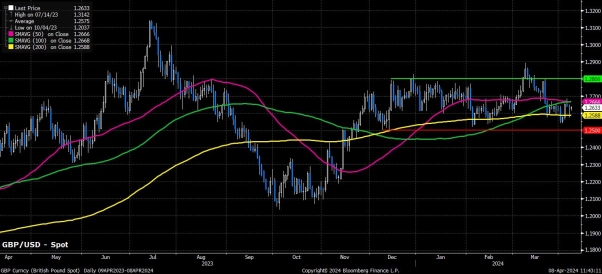
What the BoE’s New Review Means for the Market
Let’s cut to the chase: the Bank of England’s upcoming review is about to flip the script on how markets and the central bank interact. Sure, it won’t be a perfect crystal ball – every forecast has a blur behind it – but that’s a fact we’ve all seen coming.
Why the Old “Meeting‑by‑Meeting” Style Is Giving Way to a New Playbook
Imagine the BoE as a seasoned drummer who has been hitting every beat on cue. Now, it’s going to start setting the rhythm itself, crafting the soundtrack for the economy and policy conversations.
- From reactive to proactive: Instead of reacting to every market wobble, the Bank will anticipate and influence the narrative.
- Long‑term clarity: Market players will finally see a clearer roadmap rather than a whirlwind of short‑term shocks.
- Adjustment period: Both sides will need a few seasons to get comfortable with this new groove.
What This Change Looks Like in Real‑World Terms
Picture the markets as pedestrians in a city. The old system was the BoE running a heavy traffic light, letting folks decide when to cross. The new system? The BoE is rolling out a pre‑planned route guide, saying, “Hey, take this path, avoid that pothole.” It’s a more collaborative, less chaotic way to move everyone along.
Even so, traders and investors will still need to keep an eye on the forecast‑filled murky waters, because precision is a myth in economics.
Takeaway: A Shift Toward Confidence and Clarity
In short, the Bank is stepping out from behind the “meeting room” curtains and trying to set the stage for a smoother performance. While the audience (markets) might balk at first, the promise is a tighter script with a steadier dance.
Stay in the Loop!
Want real‑time updates on how these changes play out? Subscribe now and get the freshest content straight to your device. No fluff – just the facts.