From High‑Street Heroes to Digital Duds: The Post‑Covid Retail Rollercoaster
Just three years ago, the world’s favourite online entrepreneurs—Getir, Cazoo, Asos, and Boohoo—were the talk of investors. They rode a wave of pandemic‑led buying that made any brick‑and‑mortar store feel a bit like a ghost town. The High Street was supposed to be history, or so people thought.
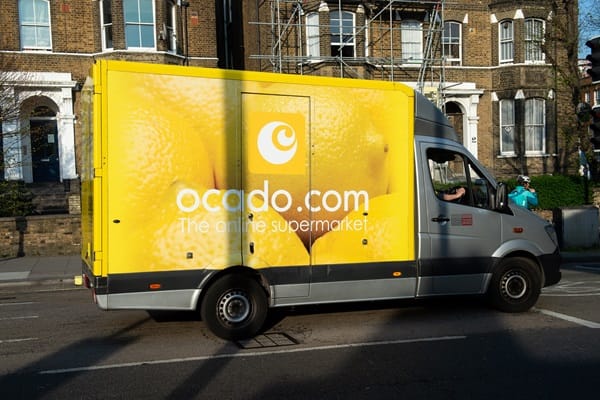
Fast forward to today: Ocado is exiting the FTSE 100, Getir has pulled its plug in the UK, Cazoo is filing for administration, and Asos + Boohoo are nursing losses that look more like dental bills than retail profits. The question on everyone’s mind? Will the High Street make a comeback, or is the digital age here to stay?
This is what Parcelhero’s new research says
Parcelhero, the delivery guru, has poured over a decade of shopping data and found a clear shift in the balance between online and offline retail. The post‑Covid world has settled into a new status quo—one that’s less about grand automatics and more about realistic, steady growth.
David Jinks, Parcelhero’s Head of Consumer Research, summed it up: “These e‑tailers were the flash‑in‑the‑pan of the pandemic. Now they’re maturing, but so are the classic High Street stores. Both sides are losing ground in different ways.
Why the online unicorns are losing their edge
- Cazoo once promised to let you buy, exchange, and finance a car entirely online. But as people started confidently heading to dealerships again, the huge, multi‑stage process of buying a car made online-only deals hard to justify.
- Food delivery giants like Jiffy, Bother, Oja, and Gorillas faded because their models couldn’t sustain profitability at the low price points that customers expected for lightning‑fast food.
- Getir’s hybrid gig‑economy paid couriers hourly rather than per delivery. That wasn’t enough to cover the costs of 10‑minute delivery, and the promotions on the UK market in 2021 felt too good to be true.
Fashion fiascos: Asos & Boohoo
- Asos struggled with a half‑year loss of £120 m and an 18 % drop in sales, marking a near‑£300 m loss for the full year ending September 2023.
- Boohoo’s pre‑tax loss grew by 69.2 %, hitting £159.9 m, up from a £90.7 m loss the previous year.
Is e‑commerce dying?
Not really. Even post‑Covid, the High Street hasn’t fully bounced back, and many retailers—physical or online—continue to struggle under the inflation spell. Yet the UK e‑commerce market remains enticing enough that Shein, the fast‑fashion giant, is considering an FTSE 100 flotation (rather than Wall Street) after pumping out $45 bn (£35 bn) of clothing for a $2 bn profit.
What the data actually shows
Looking at past numbers, we see a fascinating trajectory:
- January 2018: 16.9 % of UK retail sales were online.
- February 2021 (biggest lockdown): 37.3 % of all retail trade was online.
- By March 2022: the share dipped to 26.3 %, which held relatively stable for the next two years.
- Since then, e‑commerce has hovered between 25.6 % and 27.5 %, with most months around 26 %.
This steadiness gives tech and online companies a solid baseline—about one‑quarter of all retail spending—to base their valuations and future strategies on. While some overstretched online firms will still fail and some brick‑and‑mortar stores will crumble, the market has almost “dove” to a new equilibrium.
Final thoughts
In this post‑Covid era, the only brands that will thrive are those that seamlessly blend brick‑and‑mortar and digital touchpoints. The High Street has a chance to reinvent itself, while the online gig has a chance to consolidate. Neither sector is on the deathbed, but each must adapt if it wants to keep selling.
Key takeaways
- Digital giants that rode the pandemic boom are now adjusting to a “new normal.”
- Online retail share has settled around 26 % of total UK retail sales.
- Hybrid business models and high expectations for convenience can’t sustain without clear profitability.
- Brands that combine physical presence with a robust online strategy will dominate the future retail landscape.