Australia Declares Intention to Acknowledge Palestinian Statehood
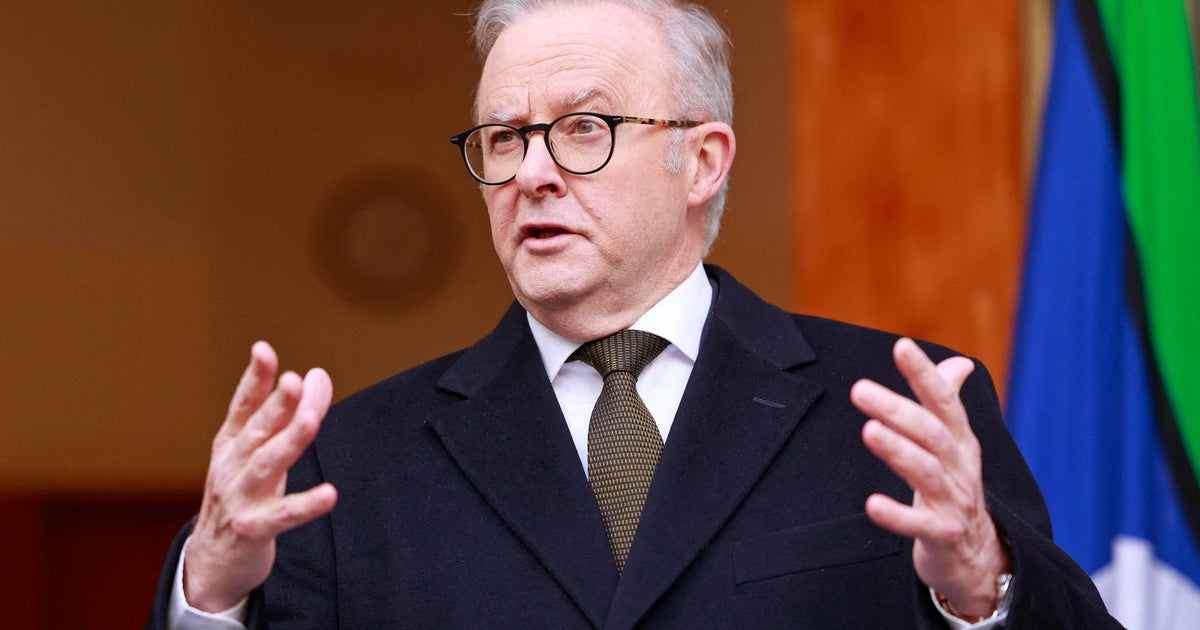
In a move that deepens the diplomatic ripple effects still emanating from the Gaza war, Anthony Albanese told journalists on Monday that Canberra will formally grant recognition to a Palestinian state after aligning its policy with that of Paris, London, and Ottawa.
Growing Domestic Pressure Sparks Shift
- Senior figures inside the Prime Minister’s own Cabinet had spent weeks publicly lobbying for a harder diplomatic line in favour of Palestinian sovereignty.
- Momentum grew as reports of widespread civilian hardship filtered out of Gaza.
- Grass-roots Australian organisations, university coalitions, and sections of the Labor caucus framed the decision as both a moral imperative and a strategic necessity.
Albanese Describes Gaza as a ‘Humanitarian Catastrophe’
In unusually blunt language, the Prime Minister declared the coastal enclave’s plight an unfolding humanitarian catastrophe, a term previously avoided by senior ministers in press briefings.
Next Steps Toward Formal Recognition
While no precise timeline was announced, officials indicated that a formal diplomatic note would soon be sent to Ramallah and that consular protocols would be updated to reflect the new status once governance structures are agreed upon between Palestinian factions.
Global Repercussions
The Australian decision is expected to trigger renewed debate in European capitals already wrestling with internal splits over the Middle East crisis. Within the Indo-Pacific, neighbouring states are watching closely to gauge whether Canberra’s move signals a broader shift in foreign-policy posture or remains narrowly focused on Palestinian rights and post-war reconstruction.
Global Backlash Grows as Israel Unveils Expansive Gaza Campaign; Australia Set to Recognize Palestine at UN Assembly in September
Albanese Condemns Expanded Israeli Offensive, Declares Two-State Reality “Humanity’s Best Path”
In an unexpected turn, Israeli Prime Minister Benjamin Netanyahu revealed a far wider assault plan on Gaza that now sweeps beyond Gaza City into the crowded “central camps” and the narrow coastal strip Muwasi, areas housing more than 500,000 displaced civilians, United Nations tallies show.
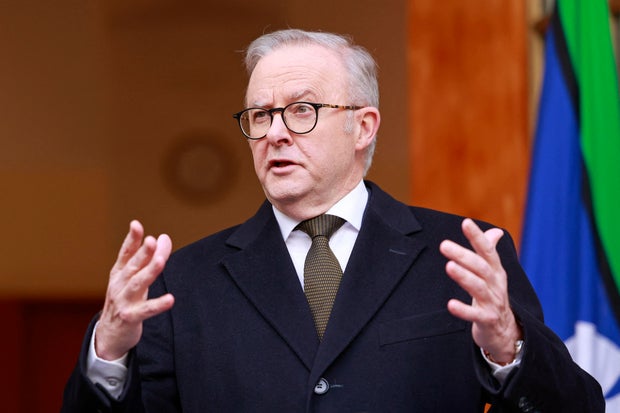
Australian Prime Minister Anthony Albanese seized his Monday press conference to warn that the humanitarian catastrophe “has already outstripped the world’s darkest fears”, blaming Israel’s blockage of life-saving aid, food and water. The Labor government will, he said, formally grant recognition to a Palestinian state at the UN General Assembly in September, contingent on three written guarantees from the Palestinian Authority:
“Until Israeli and Palestinian statehood is etched in international law, every truce is only a pause in the next bloodbath,” Albanese declared, flanked by Cabinet ministers hours after their weekly meeting.
Netanyahu’s ‘Finish the Job’ Vow Stokes Unease Among Allies
Stepping to the podium on Sunday to an even sterner cadence than weeks past, Netanyahu defended the broadened offensive: “We have no choice but to complete the total defeat of Hamas wherever it digs in.”
Yet insiders—speaking on condition of anonymity because they lack authorization—told the Associated Press that the new map of operations was not disclosed in earlier briefings, raising fresh questions in Washington and in several European capitals about Israel’s endgame.
International Shifts: From Caution to Recognition
Australia now joins a group of Western middle-power governments pivoting toward de jure recognition of Palestine before a negotiated settlement. Among the nations that have already taken or are edging toward the same stance:
Nearly 150 of 193 UN members long ago recognized Palestinian sovereignty, but Washington’s veto power and Europe’s incremental approach had kept the balance tilted toward deferral. Canberra’s shift weakens that wall.
Hamas Slammed Again, Even in the Very Act of Recognition
Albanese reiterated that Hamas, listed by Australia as a terrorist organization, is the primary obstacle to peace. “Our recognition is designed to isolate Hamas, strip it of legitimacy, and drive it from every corner of Palestinian politics, once and for all,” he said.
His pledge followed a direct call with Palestinian President Mahmoud Abbas, who has reportedly accepted the same Western-drafted conditions demanded by Australia and EU partners.
The Broader Equation: Beyond Symbolism
Asked whether the parliamentary motion would merely add ink to paper, Albanese pushed back. “Momentum is legal and diplomatic currency. Australia is not acting alone. We spent weeks aligning Canberra, London, Paris and Wellington precisely so this move forces negotiations back to the table.”
Netanyahu’s retort was swift and fiery: “Marching into the rabbit hole of premature recognition is both disappointing and shameful.” It is a message that will echo into the Oval Office and European capitals in the weeks ahead.
Yet to Palestinians in Rafah, Deir al-Balah and Khan Younis—facing both expanding bombardment and eviction notices—Australia’s announcement serves as the rarest flicker of legal recognition in a decade shadowed by blockade, war and political stagnation.
Differing reactions to Albanese’s announcement
Israeli Embassy and Jewish Groups Push Back
- Ambassador Amir Maimon slammed Canberra’s decision on X, warning that recognizing a Palestinian state lends credibility to Hamas—a movement officially listed by Australia as a terrorist group.
- The Executive Council of Australian Jewry doubled down, saying the prime minister had handed Palestinians an early diplomatic prize while asking nothing in return on core issues such as security guarantees, recognition of Israel’s right to exist, and a negotiated settlement.
Pro-Palestinian Leaders See an Empty Gesture
Nasser Mashni, president of the Australia Palestine Advocacy Network, stepped up to the microphones in Melbourne the same day and declared the announcement “too late, too hollow.” He argued:
While Australian weapons parts and agricultural imports still flow to the Israeli market, mere diplomatic words do nothing to halt the war machine that has turned Gaza into a live-streamed graveyard during the last two years.