A Hushed Boardwalk Summit in Marbella: Fresh Push for Gaza Cease-Fire
Behind Closed Doors on the Costa del Sol
While sun-seekers crowd the promenades of Marbella on Saturday, far from the beach umbrellas, U.S. Special Presidential Envoy Steve Witkoff will slip into a private villa for talks that may reshape the Gaza war. Across from him sits Qatar’s Prime Minister, Mohammed bin Abdulrahman Al-Thani.
Their objective is stark yet delicate: breathe life into a brand-new Egyptian-Qatari blueprint that could end seven months of bombing and rockets by trading the last remaining hostages for an Israeli pullout.
What the New Plan Actually Says
- All 50 hostages—those still breathing and those confirmed or believed dead—would exit Gaza on a single day.
- In exchange, Israel stops combat operations and begins the staged withdrawal of every tank and infantry unit from the Strip.
- The corridor for humanitarian relief remains permanently open, monitored by a joint cell of Egyptians, Qataris, and U.S. advisers.
The Remaining Human Toll
Fifty faces still hang on kitchen walls across Israel: 20 believed alive inside Gaza, 30 presumed lost. Behind each photo is the lingering echo of the 251 people dragged across the border on Oct 7, 2023; the rest were freed in halting cease-fires that expired as fast as they were declared.
Witkoff’s 10 Days on Two Fronts
Only seven days ago, Witkoff walked the dust-filled lanes of Khan Yunis’ only private U.S.-backed aid depot—quietly assembled by the Gaza Humanitarian Foundation with Israeli clearance—to see how palettes of flour and baby formula actually reach families caught between warring factions.
Hours later he sat in Tel Aviv with parents whose children have become bargaining chips.
“We will get them home. We will hold Hamas accountable. And we will not leave Gaza’s civilians to rot.“
That promise is now on the table in Andalucía.
Escalation Looms
Yet peace talks do not occur in a vacuum. Israel’s Security Cabinet green-lit overnight a fresh takeover of Gaza City. Military spokespersons say ground units will move in deliberately while humanitarian lanes stay clear.
To international organizations it sounds like the same warning issued three times before—only louder.
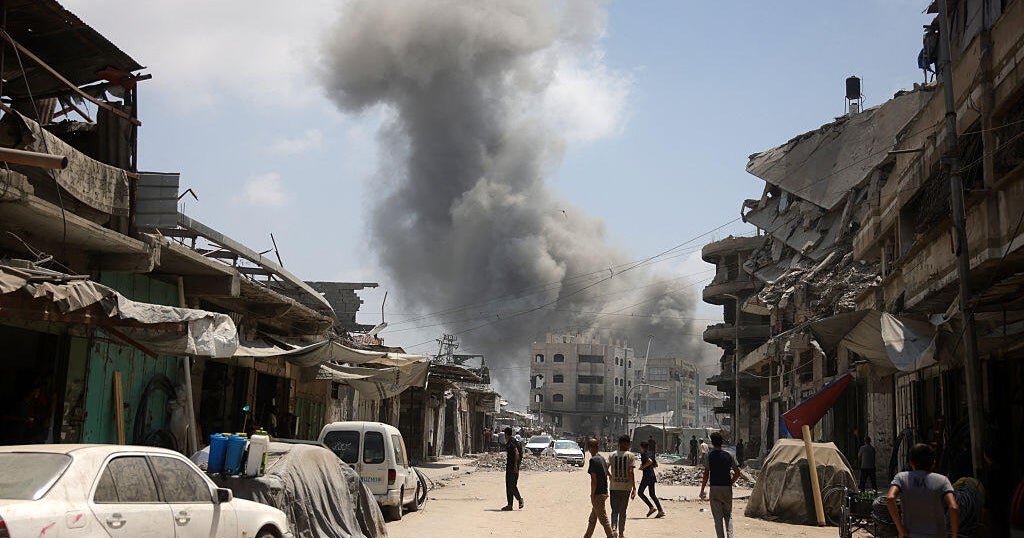
On the streets of Gaza City on Saturday, drones still buzz above shuttered buildings, but residents say no new columns of tanks have so far appeared.
Global Pushback as Israel Prepares to Broaden Gaza Offensive
Images of Desperation
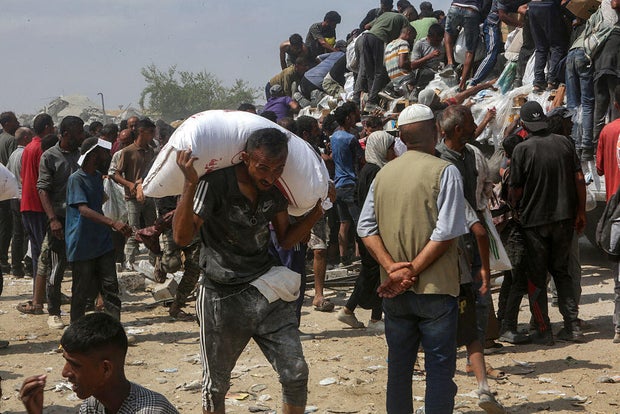
A lone man staggers under the weight of a grain bag, wading through the dust of Khan Yunis as hundreds of displaced Palestinians scramble onto aid trucks. The photograph, captured on the morning of 9 August 2025, has become the latest symbol of life on the brink in the southern Gaza Strip.
Israel’s Top Brass Raises Red Flags
Behind closed doors, Israel’s military chiefs are sounding a warning of their own. Chief of Staff Lt. Gen. Eyal Zamir has cautioned the security cabinet that deeper incursions risk two critical outcomes:
- Rapid erosion of the army’s combat readiness after almost two years of back-to-back regional conflict.
- A near-certain death knell for any hostages still breathing inside Hamas tunnels.
“Dangerous & Unacceptable” – Nine Capitals Speak Out
In an unusually blunt Saturday night communiqué, Germany, Britain, France, Canada and five other allies declared they “strongly reject” what they call Israel’s imminent large-scale land push. They list a trio of consequences:
- A humanitarian catastrophe poised to tip past the breaking point.
- Civilians used as human shields paying the steepest price.
- Any step towards annexation or renewed settlement as a violation of international law.
Riyadh to Moscow: A Widening Circle of Criticism
Joining the chorus, more than twenty governments stretching from the Gulf to the Red Sea issued their own warning. The Saudi-led text brands the planned ground maneuver a “reckless escalation.” Even Moscow, rarely aligned with regional powers, predicted the move will deepen Gaza’s already “extremely dramatic” reality.
What Happens Next
- United Nations Security Council: An emergency session slated for Sunday.
- Germany: Immediate freeze on export licences for any Israeli-bound military gear that could see use in Gaza pending further review.
Families of the Missing: “Shut the country down”
For Einav Zangauker, the political chess match feels personal. Her son, Matan, has spent 22 months in captivity. Standing outside the Kirya defense headquarters on Saturday evening beside banners bearing her son’s face, she warned, “If this operation fires up, the living will be executed and the dead will vanish forever.”
She issued what sounded like a full-throated call to action across Israeli society:
- Petition Israel’s powerful Histadrut labor union.
- Rally citizens across cities and kibbutzim.
- Consider a sweeping general strike to paralyze the economy.
Her parting cry echoed through the plaza: “Save the hostages, spare the soldiers, and preserve the soul of the State of Israel.”
Gaza Under Fire: Aid Lines Become Front Lines When Tanks Displace Trucks
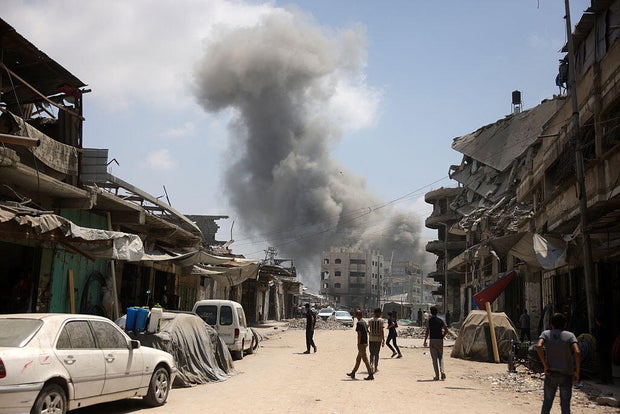
In the pale morning light of 8 August 2025, a dark plume corkscrewed above al-Zeitoun, Gaza’s battered southern suburb, announcing yet another Israeli strike. Minutes later, the fallout reached two hospitals already straining to keep heartbeats audible: Nasser and Awda. Between them, doctors logged eleven human beings shot dead while trying to collect the very food meant to keep their families alive.
When Humanitarian Routes Turn Hostile
The victims’ final moments were chillingly mundane:
- Some formed orderly rows beside a strip of asphalt where aid trucks were scheduled to pause later that day.
- Others had simply walked toward the Gaza Humanitarian Foundation’s makeshift distribution point, clutching empty plastic jerrycans and threadbare sacks.
Within seconds, the routine turned lethal. Witnesses agree on the source of the shots, if not the rationale.
Eyewitness Accounts
Ramadan Gaber, a carpenter turned refugee, described simultaneous fire from sniper nests and tank barrels positioned along the Netzarim corridor—the Israeli-controlled military strip that now slices Gaza in two. “We raised our shirts to show we carried no weapons,” he told the Associated Press. “The reply was bullets that kept us on our knees and forced us to crawl away, leaving behind two friends who never crawled again.”
Contradictory Statements
Responding to reporters’ questions, an Israeli army spokesperson wrote:
- “No live rounds were discharged at or near the distribution sites on the date mentioned.”
- “We remain uninformed—at any command level—of casualties resulting from Israeli fire during aid operations.”
No public evidence was provided to support these disclaimers, while the Gaza Humanitarian Foundation—jointly backed by Israel and the United States—issued no immediate comment.
Air-Drops amid Ground Chaos
That same Saturday, foreign cargo planes skimmed the Mediterranean, each release of white parachutes doubling as political theatre. Italy and Greece debuted in the multi-nation airlift, adding 106 food parcels to the mix. Overhead footage released by Rome’s defense ministry showed crates swaying gently across a landscape otherwise scarred by craters and cracked rooftops—an aerial postcard of scarcity and devastation.
Aid Diversion Accusations
Israel insists, without providing evidence, that Hamas commandeers large portions of incoming assistance—an allegation the United Nations-led mechanism repeatedly rejects. The U.N. counters that truck convoys remain backed up at crossing points, demanding simultaneous passage and safe transit to final warehouses deep inside Gaza, beyond the buffer zones that now ring each enclave.
In the Ledger of War Deaths
The Hamas-run Gaza Health Ministry, widely regarded by international observers as the war’s most trustworthy casualty arbiter, records over 61,300 Palestinian deaths since hostilities ignited. The figures do not parse fighters from civilians; each number, for grieving relatives, is simply a name that can no longer be spoken aloud.