Betting on China’s Stock Market: A Tale of Rising Peaks and Lingering Doubts
In the past few weeks, the Chinese equity scene has been a rollercoaster, especially on the Hong Kong bourse. Funds pouring in have sparked noticeable gains, but the big question remains: can we keep riding the wave?
When the Markets Soared
- Late September and early October saw a fireworks display as Hong Kong stocks exploded.
- At one point, the Hang Seng China Enterprises index leapt past the S&P 500, which itself has been climbing toward new highs.
- Investors were buzzing—charts were leveling up, and “green” was the word of the day.
Why the Momentum Might Stall
Despite the hype, the “stimulus” hand that the authorities were supposed to shake has fallen a bit short. Here’s why some investors are getting a bit let down.
- No fresh, bold plans are coming to the rescue.
- Consequently, the rally sits on a shaky footing, and gains have already been capped at roughly 15%.
- So, if you’re wondering whether staking your money on China’s stocks still makes sense, you’ll need to weigh the potential against the volatility.
What the Authorities Are Doing (and Not Doing)
Jumping into the deep end, Chinese regulators decided to take a more hands‑on approach, especially in the real‑estate playground.
- Lowered several interest rates to loosen the grip on borrowing.
- Directly injected support into banks—think fund‑mobilization for loans and even earmarked money for buying shares, primarily those tipped to the housing sector.
But here’s the catch—these measures may feel like little drops in a huge sea of structural woes.
Beyond the Housing Bubble
China’s economic hiccups echo louder than just a slump in real estate:
- Households are increasingly looking to “keep it safe” by parking money in ordinary deposits rather than risky ventures.
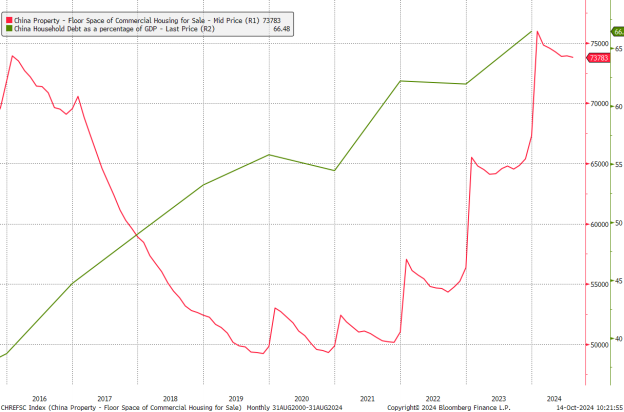
- More than 60 million spare apartments sit on the shelf, covering a staggering 700 million square meters. If we don’t start building new projects, this could chill a 3‑year period.
- Just like Japan did a decade ago, the likelihood of a prolonged economic slowdown looks a lot higher.
Debt Doesn’t Sit; It Stumbles
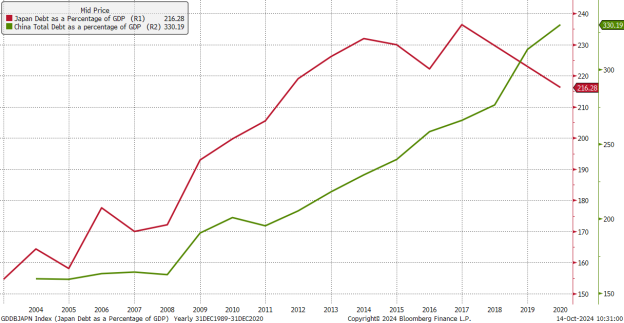
Debt is a headline: China’s total debt-to-GDP ratio is a jaw‑dropping 300%—and household debt stands at a steep 60%. These numbers stack up like a precarious tower of blocks.
- The new stimulus plan—while a beacon—lacks the sturdy backing of a clear fiscal strategy.
- In short, if you’re looking to invest, be prepared for an uphill climb and maybe, just maybe, a detour or two.
Bottom Line: Dig Your Boots Before You Fetch
In the end, the Chinese market is a mixed bag—a cocktail of high‑vibe peaks and potential slow‑downs. If you’re chasing that sweet spot, keep your eyes on policy tweaks, debt patterns, and the big picture. Toss in a dash of skepticism, a pinch of optimism, and, hey, add a little humor to make the ride a bit more enjoyable. Good luck!
China’s Housing Supply: 700 Million Square Meters of “Home‑s”—and What That Means
Picture a giant stack of floor‑plans: 700 million square meters of ready‑to‑sell house space in China. That’s like filling a room that measures about 700 million square feet. And no, that’s not a typo—Bloomberg Finance LP did the math.
What the Numbers Telltell Us
- Three Years of Sales: If every block is sold, this supply gives you roughly three full years of market activity.
- That’s before new apartments hit the market. Think of it as a pause‑stop; after that, the numbers will climb.
- For every household customer, there’s equivalent space. That means infinitely many potential storylines of “my dream house” for millions.
Why it Matters (and Why It’s Tasty)
Imagine an accountant’s dream: Buy low, sell high. With 700 million square meters already in the pipeline, the housing market’s “supply curve” is far from flat. Developers, investors, and home buyers can breathe a sigh of relief or a sigh of “okay, more competition” depending on their angle.
Bottom Line
With next‑year builds still in the pipeline, China could be letting out a whole stack of homes– and that stack could keep the market buzzing for at least three years. Keep your real‑estate radar on; the next wave is coming and it’s probably bigger than a paper plane.
China’s Debt Crisis Hits a New High: What’s Next?
Picture this: China’s total debt is now more than three times the size of its entire economy. Yeah, that’s 300%+ of GDP—pretty wild, right? The numbers come straight from Bloomberg Finance and XTB, so you know it’s legit.
Government’s “Big Move” Still on the Table
- They’re eyeing a 2 trillion yuan bond issue this year. Think of it as a financial “big‑scraping” tool to give banks a fresh coat of paint.
- It’s not a one‑shot: the plan is to keep tweaking policies to hit that 5% growth target, even though the latest measures look more like a temporary fix than a permanent overhaul.
- There’s talk that the PBOC could follow Bank of Japan’s lead and buy shares through ETFs—a strategy that helped lift Japan’s Nikkei for years. Stay tuned!
Hang Seng’s Roller‑Coaster Ride
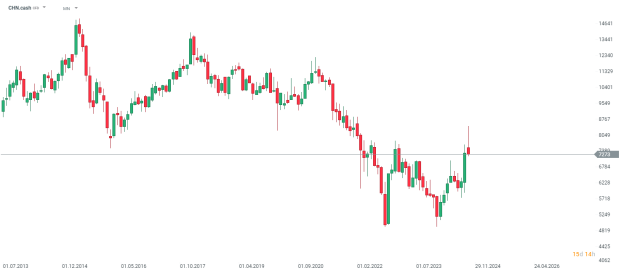
The Hang Seng China Enterprises Index has shrank roughly 15% since its peak this month and already sits below its September high. If we go back to 2021 peaks, it’s down about 40%; crunching back to the 2007 highs puts it around 70%. Bottom line? Chinese stocks are still priced low, so a strong rebound isn’t out of the question with the next support announcement.
Looking Ahead – The Big Picture
Short‑term gains on Wall Street or even Japan’s Nikkei could keep going, but without tackling China’s underlying structural problems, those gains won’t be sustainable. If the PBOC dives into ETF share purchases, it might spark a rally—just like Japan did. But that’s a gamble.
In the end, the combined effect of a huge debt burden, policy tweaks, and stock market sentiment will decide whether China can truly hit its 5% growth target this year. Keep your eyes peeled—this story isn’t over yet!
China’s Housing Drama: A Mirror of Japan’s Past
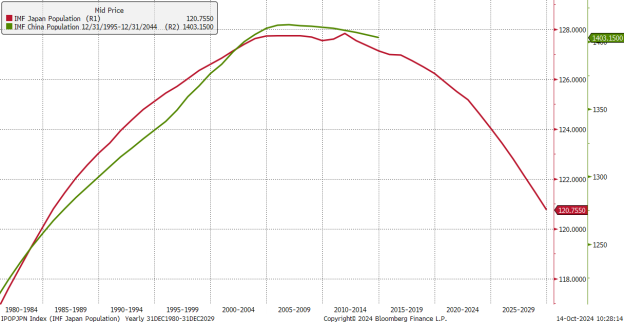
Picture this:China’s population is slowly shrinking, like a balloon losing air in a dim room. For its real estate market, that’s not just a fashion statement, it’s a full‑blown warning.
The “Negative Remix”: Why Less People, Less Homes
-
Less Demand: When there are fewer folks to buy or rent, the market feels the crunch like a sandwich with no filling.
-
Supply Slows: Developers, seeing fewer buyers, pause on new projects—think of them as holding their breath before a big jump.
-
Price Slips: With demand slipping, prices sometimes feel the tug‑of‑war in the wrong direction.
-
Investor Hops: They may step away, looking for greener fields elsewhere—as if a squirrel hides while the forest drifts.
Why Japan’s Memoir Is a Forewarning
Japan is already in that line of decline. Their housing market has been sliding for years. China can look at that narrative and see: “Hey, we might be doing the same dance.”
Bottom Line: Acting Before the Curtain Falls
Governments might need to tweak policies—give incentives, support first‑time buyers, and keep the market rolling. It’s all about preventing that “real estate market decline” from becoming a full‑on tragedy.
Source: Bloomberg Finance LP
Hang Seng’s Rocky Ride
Picture this: the Hang Seng Composite Index is hanging out about 40% below the heights it reached in 2021. The market is looking less like a roadtrip full of scenic sights and more like a brisk hike up a steep slope.
What That Means for Investors
Even though the economy’s prospects aren’t exactly sending up fireworks, the stocks in China are still way cheaper than they should be. Think of it as buying a sneaker brand that’s currently on clearance – the price is the best you can get, even if the brand isn’t trending.
Quick Takeaways
- Index drop: Hang Seng is down about 40% from its 2021 highs.
- Economic outlook: Still bleak – no bright future in sight.
- Stock prices: Chinese stocks are sweetly undervalued.
Stay in the Loop
Want real‑time updates? Get notified on your device straight from the source – no fuss, no clunk.