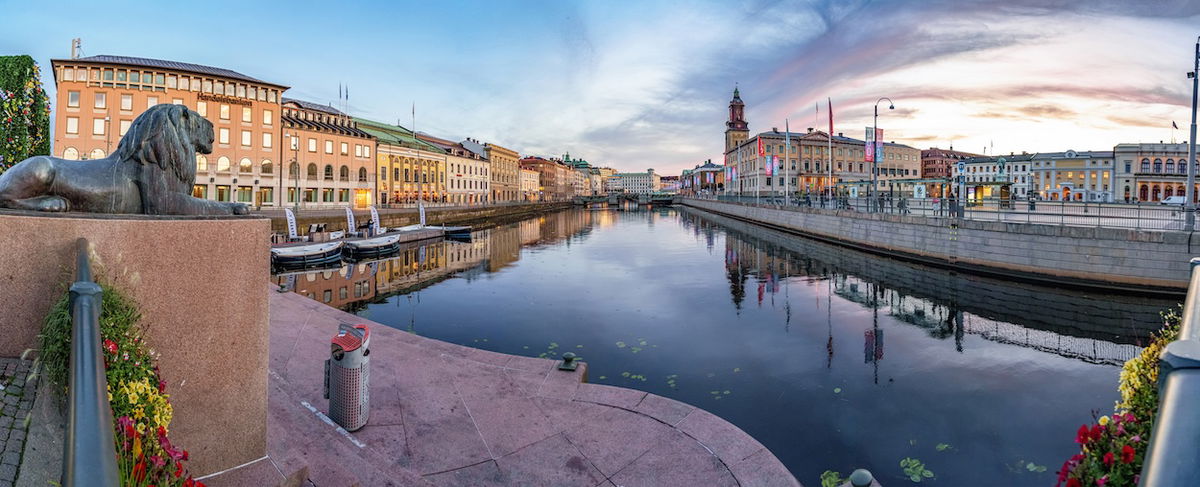
Gothenburg Rewrites Nordic Competition
While Stockholm dominates Sweden’s postcards and headlines, Gothenburg quietly reshapes what it means to compete in the North.
Key Achievements
- Largest regional port
- Global mobility R&D hub
- Five‑year streak at the Global Destination Sustainability Index
Remarkable Strategic Output for a Metropolis of 1 M+
Despite not being the capital, Gothenburg’s impact on the region, port traffic, and sustainability leadership is nothing short of extraordinary.
Built for trade, designed for advantage
Dutch Foundations of Contemporary Gothenburg
The modern city of Gothenburg traces its origins to the founding charter of 1621, granted by King Gustavus Adolphus. Yet the true architects of its layout were Dutch engineers, who transferred the canal‑building mastery of Amsterdam to a marshy Swedish coastline.
Key achievements of the Dutch planners:
- The construction of systematic water channels, ensuring efficient drainage across the lowland.
- The erection of fortified trading posts along the North Sea–Baltic corridor.
- The creation of a harbor that remains free from sea ice, shortening maritime routes.
Today the Port of Gothenburg continues to excel in commercial shipping, handling nearly 30 % of Sweden’s foreign trade while maintaining a dominant position between the North Sea and the Baltic.
Industry that shifts without stalling
Volvo’s enduring pledge in Gothenburg
When the first Volvo car rolled out of Gothenburg in 1927, the city set its sights on a future that would almost reach the clouds. Nearly a century later, the Swedish capital continues to anchor Volvo’s global empire for trucks, buses, and heavy machinery.
Adapting the industrial heart
- Electric freight delivery—Volvo’s 44‑tonne electric trucks are already in commercial service, helping cities slash emissions while keeping freight on the move.
- Skylift for the skies—Heart Aerospace’s campus, dubbed “Northern Runway,” is building the ES‑30, a 30‑seat electric aircraft that promises to take the region’s skyline to a greener altitude.
- Workforce continuity—Both ventures have woven modern mobility into the local workforce, ensuring that Gothenburg’s identity stays as intact as its steel.
Exporting tomorrow, today
Gothenburg has become a rare example of a city that, while exporting cutting‑edge mobility solutions, has not lost its workforce or its industrial soul. By turning the city into an industrial laboratory, the region is proving that the future of transportation can be made from the very same foundations that built it.
Most Read on Euro Weekly News
Denmark train crash: Passenger train collides with farm tanker

Portuguese police seize a Ferrari 488 GTB and keep it

Asian hornet spotted in Cork, Ireland warns
Sustainability as policy, not PR
Gothenburg’s Green‑Bond Blueprint
The launch of the globe’s premiere municipal green bond was no media gimmick; it was the cornerstone of Gothenburg’s climate‑infrastructure financing.
Concrete Climate Wins
- Hotel Eco‑Standards – Nearly every local hotel now carries an environmental certification.
- Car‑Free Archipelago – The southern archipelago operates without private vehicles.
- Low‑Emission Zones – The city actively enforces emission‑reduction zones on its march toward a zero‑emission centre.
These actions are tangible measurements, not mere promotional slogans.
Cultural pragmatism
Gothenburg’s Cultural Landscape
The city’s cultural fabric weaves together living for residents and enticing guests.
Entertainment hub Liseberg
Liseberg, Sweden’s top‑visited attraction, functions as a concert stage, festival plaza and seasonal Christmas market.
Public transit hub
The tram system, Sweden’s largest, slashes road congestion.
Island connections
In summer, ferries ferry commuters by bike to the nearby islands, while the bustling port handles global cargo day‑and‑night.
Did you know?
Gothenburg, Sweden: A Port Destination and Summer Archipelago Hub
Metropolitan Size: The great city and its surrounding county house an estimated 1.09 million residents as of 2024.
Economic Overview
According to Eurostat, the metropolitan region generated a €88.6 bn gross domestic product in 2021.
Primary Industries
- Transport manufacturing – high‑tech vehicle and shipyard production.
- Maritime logistics & port services – world‑class handling of cargo and traffic.
- Research & engineering services – advanced R&D and specialized design work.
Port Significance
The Gothenburg harbor moves the largest volume of freight among all Nordic ports.
Summer Archipelago Populace
During the high season, the population of the southern island group doubles, all without a single private automobile.
The verdict
Gothenburg Eyes a New Growth Blueprint
Did a Capital Worth a Mention?
While Stockholm remains Sweden’s cultural and political flagship, Gothenburg’s quiet, maritime‑driven evolution offers a sharper, more adaptable model for many observers. The Gothenburg city plans to quietly rebuild, compete on its own terms, and in certain key sectors may already outsmart the capital.
Key Features Driving Gothenburg’s Momentum
- Maritime Infrastructure – A modern port network supports trade, regional logistics, and green shipping initiatives.
- Industry Re‑invention – Former factories are being converted into high‑tech hubs, creative spaces, and sustainable production sites.
- Embedded Sustainability Policy – City plans include carbon‑neutral public transport, renewable energy transitions, and zero‑waste urban design.
Challenges and Opportunities Ahead
Gothenburg still faces challenges such as balancing rapid industrial change with preserving cultural heritage, and ensuring the maritime industry keeps up with global environmental standards. Nevertheless, the city’s underlying strategy offers a distinct blueprint that could help Sweden diversify economic leadership beyond the capital.