Some of the best beaches on this star-struck, remarkable island in the Balearics face the certainty of being wiped out because of a tsunami that will strike for sure within the next 30 years, according to experts.
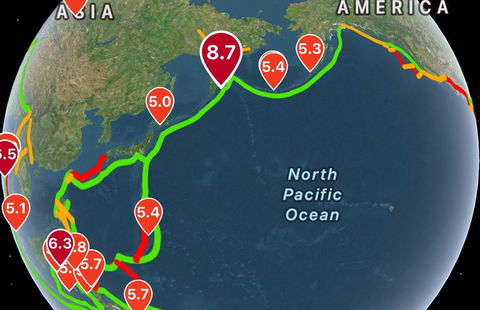
The topic has resurfaced in Spain following the 8.8 earthquake off the coast of the southern Russian península of Kamchatka on Wednesday (July 30th), triggering tsunami warnings in Pacific Ocean-bathed countries such as Japan, the United States (Hawaii and Alaska), Canada and several other nations in Latin America.
The Kamchatka seism, the eighth most intense in history, continues to generate replicas of up to 6.7. In Japan, stronger-than-usual waves hit the country’s coasts without any casualties or significant damage, but across the ocean in Peru, at least 15 ports remain shut down as a preventative measure, despite the cancellation of the tsunami warning.
Most Read on Euro Weekly News
 “>
“>
Is the Costa del Sol prepared for a tsunami?
 “>
“>
Tsunami fears across Pacific after massive Russian Quake – Hawaii and Japan on alert
 “>
“>
Germany’s debt tsunami heads for Spain and the Eurozone
Peru still cautious after the seism
Peru’s national maritime authority informed the National Emergency Operation Centre (COEN) of the closure of the 15 ports, coves and terminals in the country’s district of Paita, located in the northern region of Piura, hours after the cancellation of the tsunami warning by the Directorate of Hydrography and Navigation of the Peruvian Navy.
In central Peru, the sea level suddenly rose early Thursday morning and flooded part of the fishing district’s working area.
Spain’s Intergovernmental Oceanographic Commission has asserted that the chances of a tsunami in the western region of the Mediterranean are 100% within the next three decades.
Tsunamis have been researched in parts of the Mediterranean, and the last one was recorded in 2003, when the earth shook violently off the Algerian coast, causing waves up to two metres high, which caused damage in the port of Palma. Due to the waves, several yachts were destroyed.
Waves six metres high
Climate change is the leading cause of the increased likelihood that the Spanish Atlantic coast is at risk.
The Averroes marine fault in the Alboran Sea, the westernmost portion of the Mediterranean Sea, lying between the Iberian Peninsula and northern Africa, has the potential to generate waves six metres high that could hit the Spanish coast within 25 minutes.
However, those waves could grow to eight metres in height by the time they arrive in the Canary Islands.
Other Spanish cities, such as Huelva and Cádiz face the threat of a tsunami; however, the chances they will be hit in the future are 10 per cent in the former and 10 per cent in the latter.
More common than tsunamis in the Balearics are maritime phenomena known as rissagas or meteotsunamis, which cause very high variations in tide due to changes in the area’s atmospheric pressure.
The last rissage in Menorca occurred on June 15th, 2006. Waves grew up to 4 metres high and caused massive damage to docked boats and yachts.