Imagine rolling out of Madrid on a morning train and stepping onto a platform in Tangier before lunch. That’s the dream behind the long-mooted undersea rail tunnel beneath the Strait of Gibraltar, a project that’s suddenly back in the headlines.
Spain has set aside €1.6 million to refresh feasibility studies; Morocco is firmly at the table; and officials on both shores talk of a fixed link that would outlast storms, cut crossing times and hard-wire two continents together.
It’s still early days, but the stakes are obvious. A tunnel here wouldn’t just be a hole through rock — it would be a new economic and cultural artery between Europe and Africa.
Most Read on Euro Weekly News
 “>
“>
Property doomsday: EU rule could turn Spanish homes into unsellable bricks by 2030
 “>
“>
UK bank checks on transfers, set to cause expat headache
 “>
“>
Madrid–Barcelona low-cost Avlo trains scrapped
What’s on the table: Length, depth and a 2040 horizon
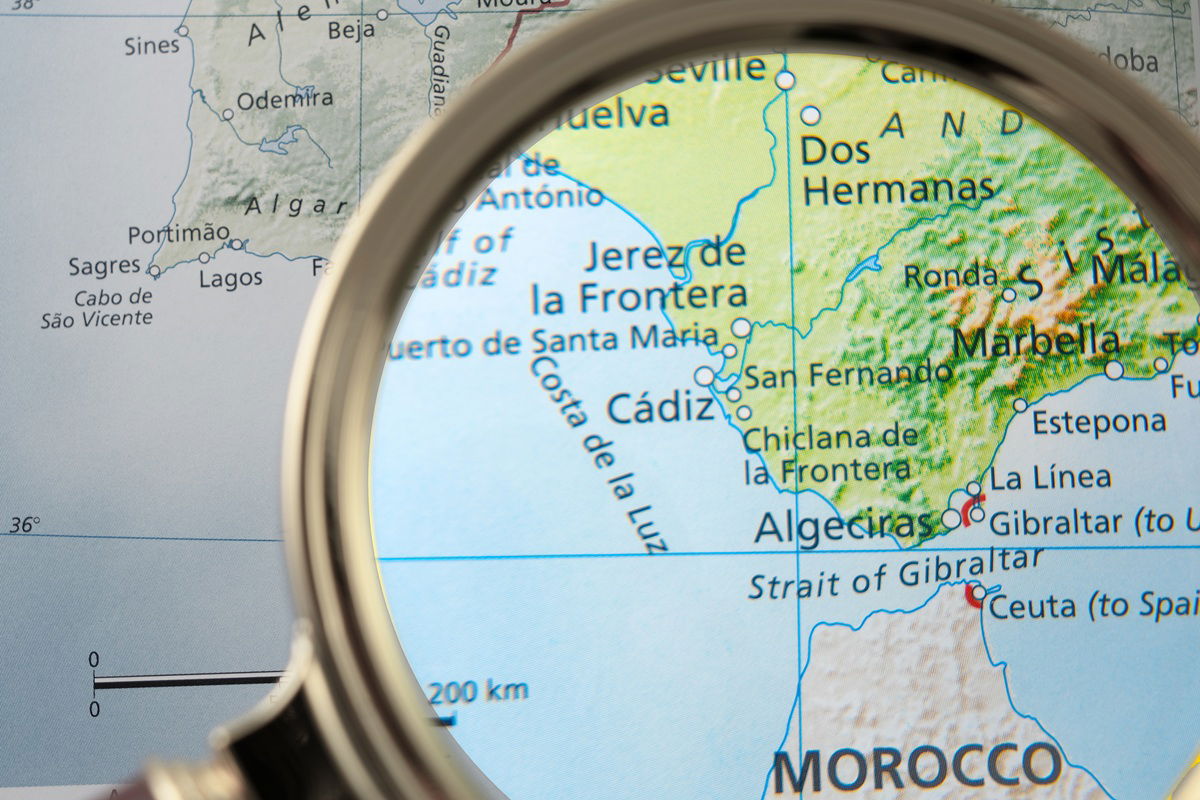
At its simplest, the plan is a rail-only tunnel running roughly 42 kilometres under the narrowest part of the strait, diving to about 475 metres below sea level at its deepest point. The latest round of work, relaunched in 2023 after years on ice, is expected to sharpen the route, the engineering and the price tag. Backers talk about the 2040s as a realistic delivery window if everything lines up.
Why bother when ferries exist? Because reliability and resilience matter. The strait can shut down in rough weather; a fixed link wouldn’t. Rail also promises a lower-carbon option for people and freight. It wouldn’t replace ships — far from it. Ferry operators are investing, with new high-speed Tarifa–Tangier services – but a tunnel would offer a permanent, weather-proof alternative, smoothing peaks and easing port bottlenecks when summer traffic booms.
For Europe, Spain becomes the southern railhead; for Africa, Morocco strengthens its role as a gateway for goods and workers. And because this is a rail line, not a motorway, it sits neatly alongside the European Green Deal push to shift cargo from road to rail.
Why it matters: Trade, tourism and soft power
Follow the money and the picture sharpens. Analysts see the tunnel as a catalyst for EU–Africa supply chains, from North Africa’s factories to West Africa’s resources, with Morocco as the staging post. A stable, all-season link would help firms stitch together just-in-time routes that don’t crumble every time the weather turns.
Then there’s the people side. Families split across the strait, students, seasonal workers, tourists — all would gain from cheaper, more predictable crossings. Morocco’s profile is already rising: it’s co-hosting the 2030 FIFA World Cup with Spain and Portugal, and every summer the “Operación Paso del Estrecho” mass migration shows how closely the two countries already co-operate. A tunnel would turn that soft-power story into steel and concrete.
Politically, too, the symbolism is potent. Spain’s foreign minister has called closer ties with Morocco strategic for Europe. In Rabat, the project is framed as continental leadership: a confident, outward-looking Morocco anchoring Africa to Europe through trade, transport and culture.
The big hurdles: geology, wildlife and politics
Now for the hard part. The corridor sits in a seismically active zone, the seabed is complicated, and the headline numbers — 42 km, 475 m deep — would test even the world’s most experienced tunnellers. On several counts it would out-challenge the Channel Tunnel, and invite comparison with Norway’s record-breaking Ryfast system. Expect years of geotechnical surveys, careful decisions on tunnel boring vs. immersed tubes, and exhaustive plans for ventilation, safety and emergency evacuation in a binational setting.
The environment can’t be an afterthought. The strait is a sensitive marine corridor. Any scheme will need rigorous impact assessments, smart ways to handle excavated spoil, and long-term monitoring to protect migratory routes, habitats and currents. Campaigners are already asking pointed questions — not least because the project has a stop–start history and a habit of over-promising timelines.
The money is another test. The €1.6m now on the table is for studies, not diggers. Real funding will require a stack of public and private cash, likely EU involvement, and a governance model that keeps two sovereign states moving in step for decades. That’s daunting — but not impossible — if leaders keep the politics calm and the paperwork honest.
What’s the upshot for travellers? In the short term, very little: expect better ferries first, including those 2025 high-speed services. In the medium term, if the studies come back positive and the financing clicks, the project could move from glossy renders to permits, procurement and test bores. And in the longer run — think the 2040s — a mainland-to-mainland rail trip could switch from science fiction to Saturday plans.
The Gibraltar tunnel has re-entered the serious-talk phase. If engineering, environment and finance line up, it could redraw the map, cut journey times and bind Europe and Africa more tightly than ever. If not, it will join the list of great ideas that never quite left the drawing board. For now, the mood music is upbeat – and the question writes its own headline: is this the link that finally brings the continents together, or the boldest “what if” of our era?