A Blazing Start to Summer: Heat Soars Beyond 40 °C Across Southern Europe
Heat-baked vineyards in southern France, fire-singed mountains in the Balkans, and thermometers in Hungary that refused to fall below historic levels marked Monday as the opening salvo of a searing early-July episode.
Temperatures that Rewrote the Record Books
- Southern France: Thermometers peaked above 109.4 °F (43 °C) in key lowland towns.
- Western Balkans: Major cities hit – and briefly surpassed – the symbolic 40 °C line.
- Hungary: A scorching weekend smashed all previous readings, making it the nation’s hottest June-to-July transition on record.
A Continent Aflame
Fire-fronts raced through four separate corridors:
Red-Alert Countries
Government agencies hoisted the highest warning tiers in France, Serbia, Croatia, and Romania, advising citizens to cancel non-essential travel, keep pets indoors, and check on elderly neighbors hourly.
Europe: The Planet’s Overheating Hotspot
While 2025 is already projected to finish as the second or third warmest since systematic observations began, Europe is outpacing the globe.
- Land heating: +2.3 °C compared with pre-industrial times—almost double the worldwide mean.
- Heat waves: Longer, stronger, and arriving weeks earlier.
- Fire seasons: Once centred on August, major blazes now erupt in late June with terrifying regularity.
The Burn Scorecard So Far
Across Spain and Portugal, firefighters have tackled thousands of ignitions, while in Greece grim tallies already list fatalities and evacuated villages. Satellite images confirm charred zones well above the seasonal average for this time of year, signaling another punishing season ahead.
France on high alert
D-Day for the Thermometer: 12 French Regions Face Code-Red Heat Siege
Monday’s dawn bulletin from Météo-France read like a battlefield report. No fewer than twelve departments—stretching in a diagonal belt from the Atlantic surf of Charente-Maritime to the olive groves of Gard—were drafted into the scarlet category, signalling “danger extrême” for man, beast and crop alike. A further 41 departments, together with the entire microstate of Andorra wedged between France and Spain, were painted amber, one rung lower on Meteo’s four-colour ladder.
Voices from the Furnace
Beneath a sun already white-hot by 9 a.m., agricultural climatologist Serge Zaka addressed the nation from Montauban in Tarn-et-Garonne. Speaking to BFMTV, he warned:
“Do not comfort yourself with the old lie that ‘this is just summer doing its thing.’ This is not summer—this is a slow-motion nightmare unfolding in real time.”
The Geography of Extreme
The red-alert perimeter now encompasses a patchwork of landscapes where temperatures are expected to top 42 °C in the shade:
- Dordogne and Gironde, famous for red wine and rolling vineyards
- Lot-et-Garonne and Tarn-et-Garonne, orchards already wilting under the glare
- Hérault and Gard, whose coastal lagoons usually breathe relief but are today as warm as soup
- Pyrénées-Orientales, where foothill farms fear desiccated maize stalks by harvest
What the Color Codes Mean
Red Alert:
Everybody is at risk; heatstroke can occur within minutes, even for the young and fit. Public swimming pools may open through the night, some rail services are cancelled, outdoor festivals halted.
Orange Alert:
The elderly, infants, outdoor workers and anyone with chronic conditions face serious danger. Municipalities are ordered to check on the isolated, while schools may adjust hours or shut entirely.
From Vineyards to Vet Clinics: How France Prepares
- Vine estates in Saint-Émilion have started pre-dawn harvests to keep fruit from burning on the vine.
- Emergency veterinarians report a surge in heat-stressed livestock; mobile hydration units are roaming the Landes pastures.
- Electricité de France has triggered its “red eco-plan” to curb demand during peak air-conditioning hours.
- Several département prefectures have suspended speed limits on motorways to prevent tyre blow-outs on softened asphalt.
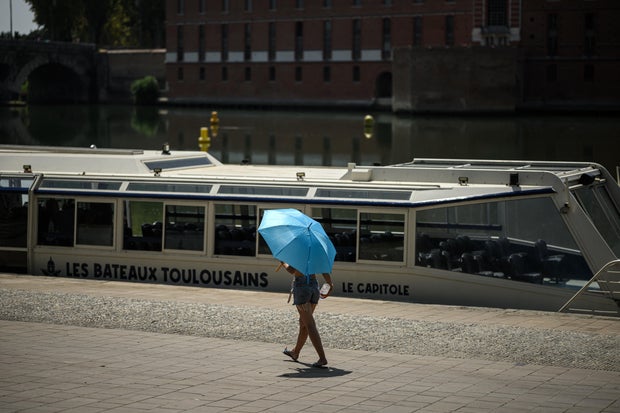
Under a White-hot Sun, the South of France Becomes a Mosaic of Smoke and Shadows
MIDDAY SHADE IN THE PINK CITY
A lone silhouette glides along the stone quay of Toulouse. Wearing a straw-colored dress and gripping a wide, black umbrella, she cuts a quiet line through the midday haze above the Garonne. Riverboats—brightly painted excursion craft that should be buzzing with wine-tasting chatter—sit tethered and empty, their reflections fractured by the slow roll of the current. From the opposite bank, heat shimmers like glass.
MIRRORS, FOIL AND GHOSTLY AVENUES
Similar scenes repeat 250 kilometers east, in Valence: Instagram snapshots show boulevards bereft of the usual August crowds. Terracotta shutters are snapped shut, balconies glitter with tinfoil improvised to bounce the sun away, and pedestrians scurry from one sliver of shade to the next as though the very pavement were glowing.
How Towns Are Coping
- Cafés. Once-lively terraces now stack plastic chairs indoors, leaving sidewalks to the cicadas.
- Shops. Boutiques pull steel grilles halfway down at 11 a.m., reopening only after dusk.
- Homes. Children press cold water bottles to their necks while parents tape reflective emergency blankets across sun-facing glass.
THE FIRE LINE IN AUDE
Farther south still, the landscape shifts from riverbank stone to the rippling vineyards and garrigue scrub of the Aude department. Here, the heat has moved from discomfort to devastation.
Numbers That Define the Scorch
- 16,000 hectares of earth transformed into ash and charcoal.
- 400 firefighters remain on rotation, black masks pulled below weary eyes.
- Weeks, officials insist, is the realistic timeline for total extinction; pockets of peat and root continue to glow orange beneath the surface.
Sprinkler trucks thread the vineyard lanes, dousing rootstocks to keep them alive—ironically, using local rosé tankers commandeered for the purpose. Along every crest, heat-sensing drones orbit like vigilant hawks, relaying flare-ups to ground crews within minutes. The smell drifting across the rolling hills is no longer the peppery fragrance of ripening Syrah but the sweeter, resinous scent of burning pine mixed with singed limestone.
TEMPERATURES THAT TURN CITIES INSIDE-OUT
In Toulouse’s grand squares, even the pigeons have vanished. Souvenir shops that normally sell postcards of Capitole sunsets now do roaring midday business in battery-powered hand fans and wide-brimmed straw hats. Tourists—those who opted against canceling—share quiet nods of solidarity, recognizing the same umbrella-wielding woman from the riverbank hours earlier as they retreat into the nave of Saint-Sernin Basilica for the cooling embrace of its ochre stone walls.
NIGHTFALL BRINGS NO FULL RELIEF
When dusk finally slides over the hills like a bruise, temperatures dip only into the high twenties Celsius. Fire engines continue to prowl the dark vineyards of Aude, LED light bars sweeping across rows of vines that glow faintly where embers persist. Somewhere above the Garonne, the silhouette woman re-emerges—umbrella folded now against the softer night air—while far below, a lone excursion boat finally pushes off from the dock, its low engine thrumming like a heartbeat returning to the heat-dazed city.
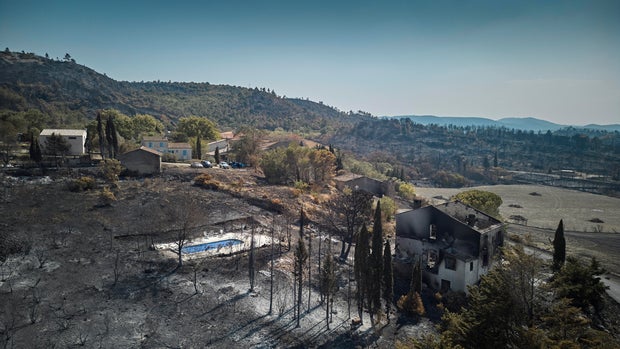
France’s Scarlet Thermometer—Living Inside a Rare Red Heat Alert
Jonquières, August 2025. Nothing remains of the hillside villa but a ghost of scorched stone. A few twisted beams jut from blackened earth like broken ribs, framed by a sky the color of rust. For villagers, the charred outline is no longer a warning of distant flames; it is a silent bell, tolling the arrival of a summer so punishing that even national authorities run out of words to describe it.
What a “Red Alert” Really Means
Since 2004—a year born from the ashes of the lethal 2003 heat wave—France’s meteorological service has hoisted its highest flag, rouge, only eight times. Each time, the country is forced to redraw its maps of the possible:
- Event bans: open-air concerts, marathons and neighborhood fêtes vanish from the calendar overnight.
- Public closures: parks, swimming pools and some museums shutter their gates.
- School pivots: summer camps compress or cancel field trips, sending parents scrambling.
The Second Furnace of 2025
This heat dome began to bloom on Friday and shows no sign of wilting before the August 15 holiday. It is migrating north faster than officials predicted, dropping sweltering breadcrumbs from one province to the next:
- Centre-Val de Loire: 38 °C (100.4 °F)
- Paris basin: 34 °C (93.2 °F)
- Suburban commuter lines already advise riders to carry water in measured liters—no amount of imagination will conjure more air-conditioning.
Living Hour-by-Hour
Households along the Rhône and Loire are taping aluminum foil to windows, improvising cold-water foot baths in plastic bins, rationing evening stovetop dinners to conserve what little cool air settles after sundown. Pharmacies are selling out of rehydration salts; bakeries close at noon. One elderly woman in Orléans tells reporters she has moved her rocking chair to a tiled bathroom and sleeps inside the tub—an improvised refuge from a season rewriting the geography of safety.
Next Move: The Long Weekend
In three days, millions will attempt escapes to beaches and grandparents. But this year, the roads themselves feel hazardous: asphalt softens under the tires, fuel pumps overheat, and any spark—the flick of a cigarette, the scrape of a trailer chain—could ignite a landscape already cracked and brittle. Firefighters are already staging tankers along the A7. The heat is not simply coming; it is here, pressing its palms against every French windowpane, demanding to be let in.
Heat health alerts in U.K.
Heat-Health Warnings Blanket Much of England as Fourth Summer Scorcher Looms
Alert Levels Elevated Across Central and Southern Regions
The U.K. Health Security Agency has fired off a flurry of heat-health notices stretching from the Midlands to the southern coast, flagging communities that oppressive temperatures are on the doorstep. While some counties received cautious yellow advisories, others have already marched into the more serious amber zone—one rung short of the rare “red” emergency status.
- Timing: Warnings remain active through Tuesday and Wednesday.
- Impact focus: Officials expect broad repercussions on public health, transport, and essential services.
Forecasts: Mercury Knocking on 34 °C
Forecasters from the Met Office, quoted by BBC News, paint a picture of relentless warmth: daytime highs could spike to 34 °C (93 °F) by mid-week, satisfying the technical definition of a heat wave when highs stay elevated for at least 72 consecutive hours.
- Hot spots: London, Cambridge, and Oxford are predicted to lead the thermometer race.
- Night relief: Overnight lows may hover around 20 °C, giving little respite to vulnerable groups.
This Summer’s Tally: Four Heat Waves and Counting
Should predictions hold, the nation will notch its fourth official heat wave of the season, underscoring how 2024 is stacking up as one of the warmest summers on record.
The agency is urging residents—especially the elderly, very young, and those with chronic illnesses—to:
- Stay hydrated
- Avoid peak sun hours between 11 a.m. and 3 p.m.
- Check on neighbors and relatives
- Keep indoor areas cool with curtains closed and fans running
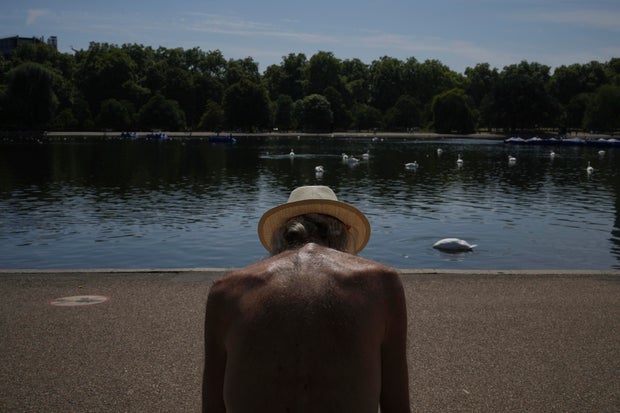
Londoners Bask in Golden Glow as Heatwave Sinks Softly Over the Capital
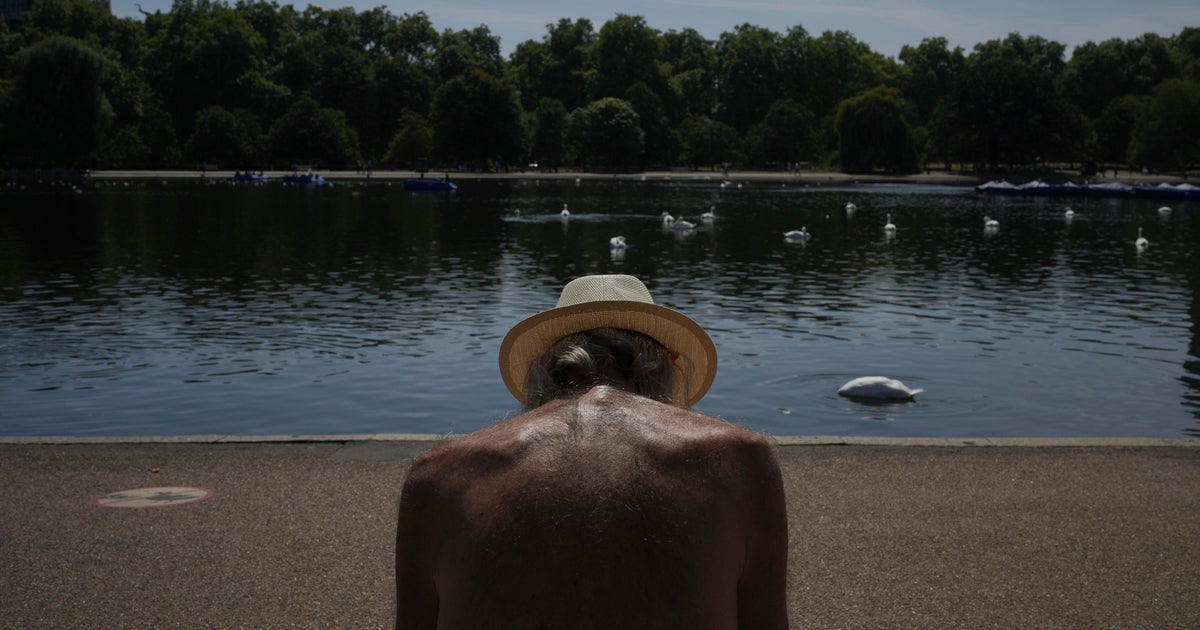
Beneath a sky the colour of melted butter, Wednesday unfolded like a postcard from midsummer. Across the city’s emerald pocket parks, benches that had waited out weeks of drizzle were suddenly claimed by Londoners eager to absorb every extra degree.
The Scene: One Man, One Bench, One Slow Afternoon
- Dozens of sparrows dart between plane-trees, their wings flashing like tossed pennies against the light.
- A solitary figure rests on polished wood slats, jacket draped behind him, shoes kicked off as if the turf itself had turned into a private shoreline.
- Steam rises from someone’s paper cup—an iced drink surrendering its chill two sips in—while an ice-cream van jingles somewhere just out of view.
Heatwave Facts That Float Alongside the Breeze
Temperatures climbed briskly through the morning, nudging the mercury past 29 °C in parts of Greater London and matching figures last seen in July. Forecasters hint the pattern could linger for three more days before cooler Atlantic air pushes in.
Daily Life in a Rare Sun Trap
- Office workers migrate to any square foot of grass, laptops balanced on knees, ties loosened in silent agreement.
- Dogs zig-zag toward duck ponds; toddlers chase bubbles as parents debate SPF50 versus a quick splash of factor 30.
- Bus roofs shimmer like mirrors; cyclists weave in slow motion, helmets unclipped, faces lifted toward warmth.
Glimpses Caught Between Shadows
In the hush that settles under chestnut canopies, the man on the bench turns a page of yesterday’s newspaper. For a moment, headline and date blur—then August 11, 2025 sticks, printed bright and unforgettable, a day London decided to taste summer one final, generous time.
Western Balkans
Wildfires Race Toward Montenegro’s Historic Heart and Coastal Paradise
In dramatic scenes unfolding across Montenegro, walls of flame have surged from rocky hillsides to the edge of Podgorica’s suburbs while simultaneously threatening holiday towns along the shimmering Adriatic shoreline, leaving civil-defense teams pleading for outside help.
Ancient Duklja in Flames’ Path
Army convoys thundered north of the capital at dawn after evacuation sirens alerted hundreds of families living among pine forests that fire was minutes away from the archaeological site of Duklja, once a prosperous Roman city. Soldiers scrambled with shovels and portable water tanks, carving fresh firebreaks to spare columns, basilica mosaics, and stone ramparts from the approaching inferno. “We can replace hoses, but we cannot rebuild two-thousand-year-old walls once they crumble,” remarked a young lieutenant directing relief trucks along a smoke-choked track.
Coastal Resort Canj Under Red Sky
Sunset brought little relief to Canj, where frightened tourists clutched suitcases on seafront promenades overlooking orange crests licking the slopes above the turquoise bay. Hotels converted conference rooms into emergency dormitories, offering bottled water and fruit to residents fleeing hillside homes. One café owner described the spectacle:
Catastrophic Labels and Cross-Border Requests
Emergency chief Nikola Bojanovic minced no words: “We are facing a catastrophic scenario. The wind has switched direction four times in eight hours—each turn spreads new embers miles ahead of the main front.”
His office has officially asked Croatia and Serbia for helicopters, flame-retardant chemicals, and specially trained crews able to work in narrow canyons where vehicles cannot reach.
Conservation Plea from Water Boards
With reservoirs feeding hoses and helicopters around the clock, the national water authority issued an overnight appeal:
Failure to cut consumption now, officials warn, would trigger immediate residential rationing at the very time firefighters need every available liter.
Outlook: Waiting for the Wind to Turn
Weather forecasters insist only a significant drop in gust strength—predicted no earlier than Tuesday night—will allow ground crews to box in the advancing flames. Until then, Montenegro’s small republic continues a sleepless vigil, guarding priceless heritage on one front and cherished coastal livelihoods on another.
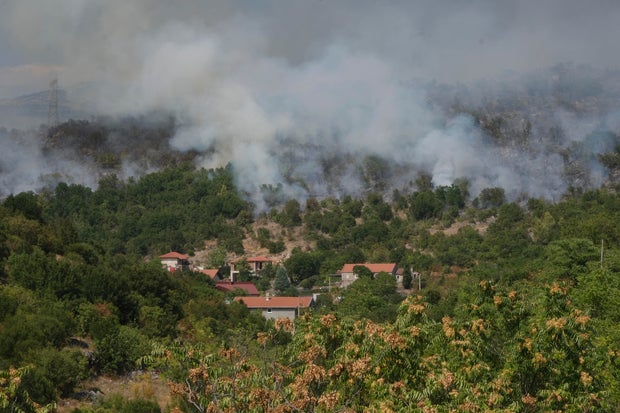
Blazing Balkans: Heatwave Ignites Wildfire Outside Podgorica
Dark plumes of smoke spiraled above the pine–clad slopes just 12 miles east of Montenegro’s capital on Monday, Aug 11 2025, after a fast-moving wildfire broke out in the early afternoon. Fire crews battled shifting winds and temperatures above 40 °C while residents watched helicopters dump water over crackling tree canopies.
Record Thermometers from Mostar to Dubrovnik
- Mostar, Bosnia: mercury soared to 43 °C (109 °F), matching the city’s all-time summer peak set in 2012.
- Dubrovnik, Croatia: historic ramparts baked beneath 34 °C (93 °F) before noon, prompting port authorities to shorten shifts for open-air workers.
Voices on the Streets
“Even after sunset the air feels like an oven,” said Fatima Safro, pausing under a kiosk awning in the old town of Mostar. “We open every window, yet neither breeze nor prayer brings relief.”
Parched Pastures in Serbia
Along the limestone ridges of Suva Planina, farmers sent urgent requests to Belgrade for emergency tankers of water after springs and cattle ponds reduced to cracked mud. Livestock—some already moved to higher grazing grounds—now cluster beneath solitary chestnut trees in search of shade.
Maximum fire danger alerts in Bulgaria
Scorching 40 °C Sends Bulgaria into Red-Alert Wildfire Crisis
Bulgaria baked at an expected 40 °C (104 °F) on Monday, pushing nearly every corner of the country into the highest-possible fire-risk category. With tinder-dry forests and an unforgiving wind, flames have flared across almost 200 separate locations since the heatwave intensified, according to preliminary tallies.
Current Fire Landscape
- Most incidents: Already doused or firmly ring-fenced by local brigades.
- Three major fronts: Still raging uncontrolled along Bulgaria’s borders with Greece and Turkey.
- The Strumyani blaze: Re-ignited after three weeks of apparent calm, adding urgency to containment efforts.
Elite Crews Called In
More than 100 firefighters, rangers and emergency medical teams have deployed across cliff-sided terrain that trucks cannot reach. Military helicopters shuttle water by the ton while two specialised Swedish water-bombers have joined the assault from above.
Official Warning
Alexander Dzhartov, who leads the national fire safety command, warned that while progress is visible on many fronts, “the situation remains very challenging and could worsen with the slightest shift in wind direction.”
Evacuations in Turkey
Scorched Earth on the Dardanelles Coast: New Inferno Erupts Hours After Last Fire
A sudden, wind-driven wildfire surged across the Çanakkale landscape today, devouring dry farmland and leaping into pine forests and forcing frantic overnight evacuations of seaside vacation houses, a university campus and every vessel trying to pass the Dardanelles.
Timeline of a Flash Crisis
- Early morning: A spark—probably from farm machinery—ignites stubble in an inland wheat field.
- By mid-morning: Temperatures near 40 °C and 50 km/h gusts turn the patch of flames into a wall advancing on woodland and coastal hamlets.
- Noon: Authorities order the full evacuation of a university campus on the Gelibolu peninsula as smoke billows overhead.
- Shortly after: The Dardanelles Strait, one of the world’s busiest marine chokepoints, is closed to traffic so orange-painted aircraft can skim the surface scooping water.
Back-to-Back Blazes
Fire crews had only just stamped out a twin blaze 2 km away on Thursday. Barely 48 hours later, burnt earth and smouldering roots reignited, exposing exhausted firefighters and surprised residents.
Governor Sounds Alarm
“For public safety and to give our aerial units room to work, the strait remains closed for now,” Governor Ömer Toraman announced. The suspension of maritime passage sent freight and ferry timetables into disarray, with ships lining up at both ends of the waterway linking the Aegean and the Sea of Marmara.
What Happens Next
Cooler, calmer winds tonight could offer a brief respite, but forecasters warn of another heat spike during the coming weekend—raising the spectre of even more fires racing across these historic shores.
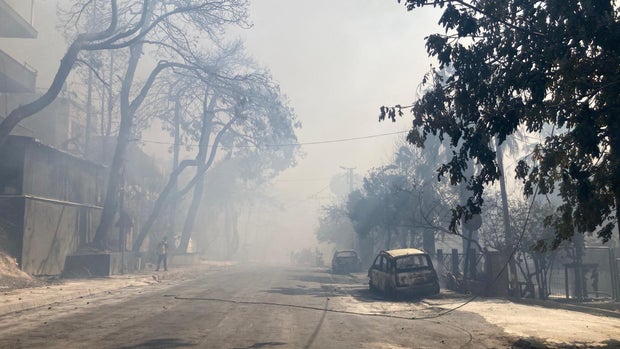
Charred Hills, Racing Flames: A First-Hand Snapshot from Kepez Forest
Monday, 11 August 2025 – Çanakkale, Türkiye
A lone firefighter, streaked with soot and sweat, lifts a branch still glowing ember-red and tosses it into a spray of water that vaporizes instantly in the midday heat. Behind him, pine trunks stand charred like blackened candles; ahead, the forest floor smolders in patchwork orange. The air, once heavy with resin and birdsong, now crackles with the dry hiss of burning underbrush.
- 10:07 a.m.: First wisp of smoke sighted above the Kepez ridge.
- 10:25 a.m.: District alarm sent 48 firefighters and four bulldozers weaving up the mountain switchbacks.
- 11:08 a.m.: Wind direction shifts, pushing flames toward scattered summer cottages. Residents evacuate with only minutes to grab dogs, deeds, and water jugs.
The View from the Ground
The scene is an improvised battlefield. Tankers the size of buses roar up dirt tracks, spraying white arcs over licking firelines. Helicopters dip low, buckets dangling like teacups, before releasing their loads in shimmering cascades. Each pass earns a murmured cheer from exhausted crews who have worked nonstop since dawn.
In a makeshift command tent, incident chief Lieutenant Duru Karan plots fresh containment zones with a map flecked by ash. “All that stands between the fire and the village right now is a ridge line and our next water drop,” she says, eyes rimmed red from wind and worry.
Quiet Moments Amid Turmoil
A short distance away, an elderly villager cradles a scorched bird inside a handkerchief. When asked why he risked staying, he shrugs: “My olive trees are older than I am; I couldn’t leave them to burn alone.” Firefighters steer him gently to a waiting ambulance for a precautionary check.
- Twenty hectares of mixed pine and maquis already lost.
- No injuries reported, though two rural power lines are down.
- Temperatures expected to peak near 39 °C again tomorrow, raising fears of re-ignition.
Through a Photographer’s Lens
Sevi Gözay Uğurlu, crouched behind a heat-scarred stump, frames the stark contrast: neon orange flame against a sky dulled by gray plumes. “It’s surreal,” she whispers, pressing the shutter. “In one click you see both the destruction and the determination.”
While darkness approaches, helicopters retreat, yet drones equipped with thermal cameras hover overhead, scanning for hidden hotspots. Ground crews swap helmets for headlamps, planting their shovels like spears against an enemy that will keep them awake until morning.
Hungary records record-breaking heat
Hungary Scorched: 39.9 °C National High Smashes 1948 Mark
Sunday delivered a historic wall of heat across Hungary, pushing the mercury to 39.9 °C in the country’s southeast and surpassing a record that had stood since 1948. Budapest itself set an all–time city benchmark at 38.7 °C, transforming boulevards into concrete ovens in the late afternoon.
A Day of Firsts
From Red Warnings to Fire Bans
In response, authorities issued nationwide prohibitions on all open fires beginning at sunset. Forestry crews and local fire brigades remain on 24/7 standby while reservoirs and irrigation canals register 15-year lows.