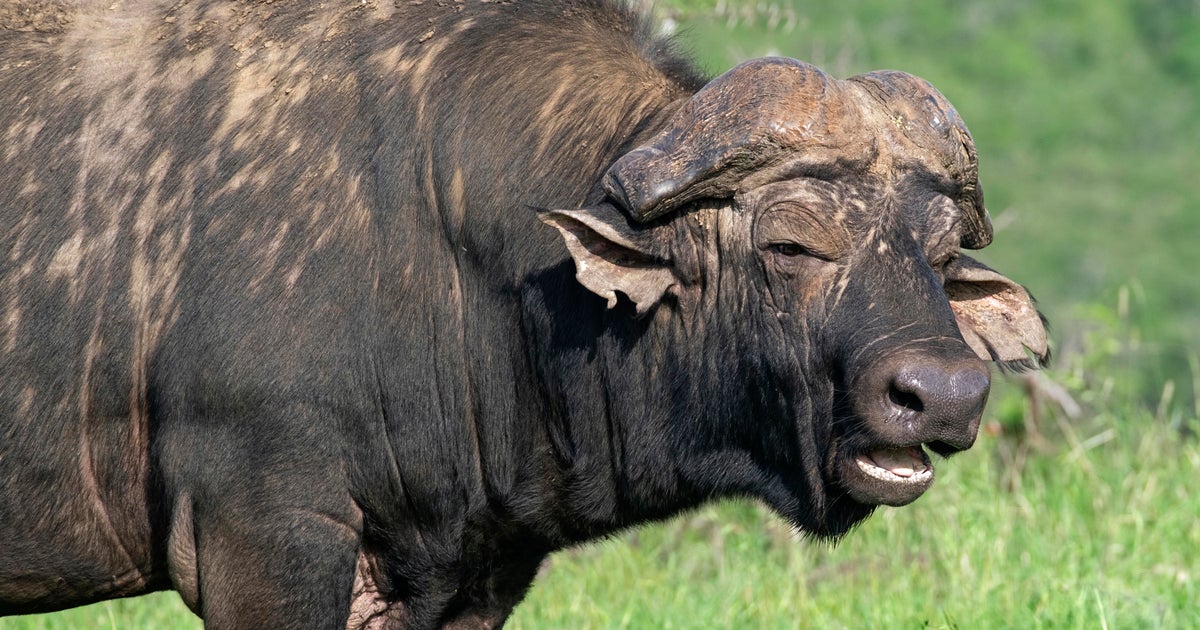
South Africa Tragedy: Dallas Trophy Hunter Becomes Prey in Limpopo Buffalo Strike
Swift but Brutal Encounter on a Private Game Farm
A quiet Sunday morning south of the Zimbabwe border turned deadly when a seasoned American hunter was fatally assaulted by a fully-grown Cape buffalo he had spent days pursuing.
Local authorities confirmed that the incident occurred on an isolated cattle-and-game farm nestled within Limpopo’s mopane woodland—territory notorious among guides as ground-zero for the continent’s most unpredictable quarry.
Scene Details from Provincial Officers
- Security patrol staff alerted police after hearing repeated shouts and rifle shots from a thicket.
- First responders discovered a 52-year-old man inside a private ambulance already pronounced dead.
- The buffalo was located barely 30 metres away, lying in a shallow gulley with fresh bullet wounds to the shoulder and neck.
- Autopsy findings cited deep lacerations across the abdomen and upper torso—classic signs of a direct horn thrust.
Identified by Industry Sources as Dallas Resident
Though South African police withheld the victim’s name pending formal notification of kin, several U.S. outlets verified him as 52-year-old Asher Watkins from Dallas, Texas.
Watkins had booked the expedition through Coenraad Vermaak Safaris, a third-generation outfitter whose marketing material openly brands buffalo hunts as “the ultimate adrenaline test”.
Company Statement Highlights the Attack’s Sudden Nature
“Asher was moving through dense riverine bush in tandem with our professional hunter and tracker when an unwounded bull emerged at close quarters and charged without warning,” said Hans Vermaak, spokesperson for the family-run operator.
“In a split second the buffalo made contact. Despite immediate emergency aid he succumbed before the airlift arrived.”
Why Big-Writers Call Buffalo “The Mafia of the Bush”
The Cape buffalo—Synercus caffer—weighs up to one tonne and can reach speeds of 35 mph in short bursts. Unlike many herbivores, herds will often retaliate against perceived threats, circling back silently or even staging ambushes. Safari journals attribute dozens of serious injuries in southern Africa each year to precisely this behaviour.
Key Facts for Hunters and Travellers
- The buffalo’s horn span can exceed one metre, delivering penetrating wounds capable of snapping ribs instantly.
- Backup trackers carry heavy-calibre rifles precisely because wounded bulls are legendary for doubling back from seemingly impossible angles.
- Medical evacuations in this region rely on a single all-weather airstrip; trauma teams estimate that a “golden hour” rescue window is often halved by terrain.
No Charges Filed; Investigation Continues
Limpopo police stated that no foul play is suspected and the file remains open while forensic ballistics and animal autopsy results are compared. Meanwhile, the Vermaak family has suspended all buffalo pursuits for the current season, offering condolences and promising a full incident report.
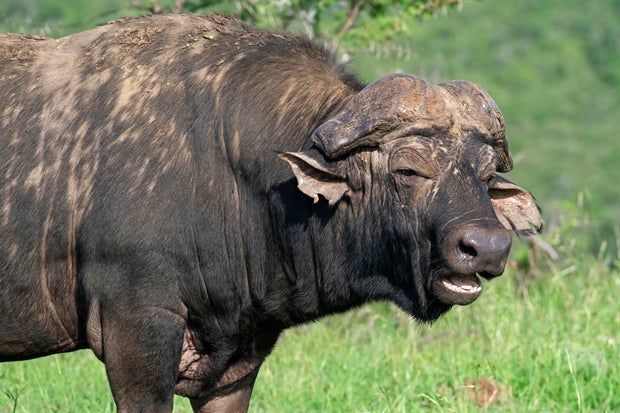
Giant Shadows in the Hluhluwe-Imfolozi Scrub
In the red dust of KwaZulu-Natal, where thorn trees scratch at the sky and acacia scent hangs thick on every breeze, the African Cape buffalo still rules. An adult bull—scarred by hyenas and time—can tip the scales at more than 800 kilograms. His bulk ripples beneath a black hide the colour of burned charcoal; in the morning light he is a living barricade, formidable against a backdrop of lion-coloured grass.
A Member of the “Big Five” Elite
Alongside elephant, rhinoceros, lion and leopard, the buffalo forms Africa’s so-called “Big Five”—the trophy hunter’s glittering checklist. Yet for all the blood-stained glamour that nickname has attracted, local Zulu trackers still whisper n’Dlovu nyathi mbili: “elephant and buffalo are kin” … meaning both should be treated with a cautious respect bordering on reverence.
By the Numbers
- $169 million – annual revenue injected into South Africa’s economy through regulated hunting tourism (University of KwaZulu-Natal, July 2023).
- $32,663 – average spend per foreign hunter during a single safari, most hailing from the United States as well-off retirees eager to bag a legendary trophy.
- 3,500–4,200 – the poundage of mature buffalo bulls, translating into roughly 1.6–1.9 metric tons of muscle and sinew moving through the lowveld.
Beyond the Dollar Signs
Yes, the industry fills lodges, guides and butcheries. Yet rangers in Hluhluwe-Imfolozi will tell you a quieter story: every hide surrendered, every set of horns mounted on an American fireplace, helps fund anti-poaching patrols and veterinary fence repairs. What the glossy brochures seldom mention is that each bullet also buys an extra ranger or a repaired borehole the buffalo themselves will drink from weeks after the client has flown home.
The Last Word
Whether viewed through a safari rifle’s magnified circle or through binoculars held steady by an amateur naturalist, the Cape buffalo stands unbowed—a dark monument on four legs. His future remains tangled with that of the very hunters who seek him out, joined by an invisible ledger of dollars, duties and a stubborn will to survive.