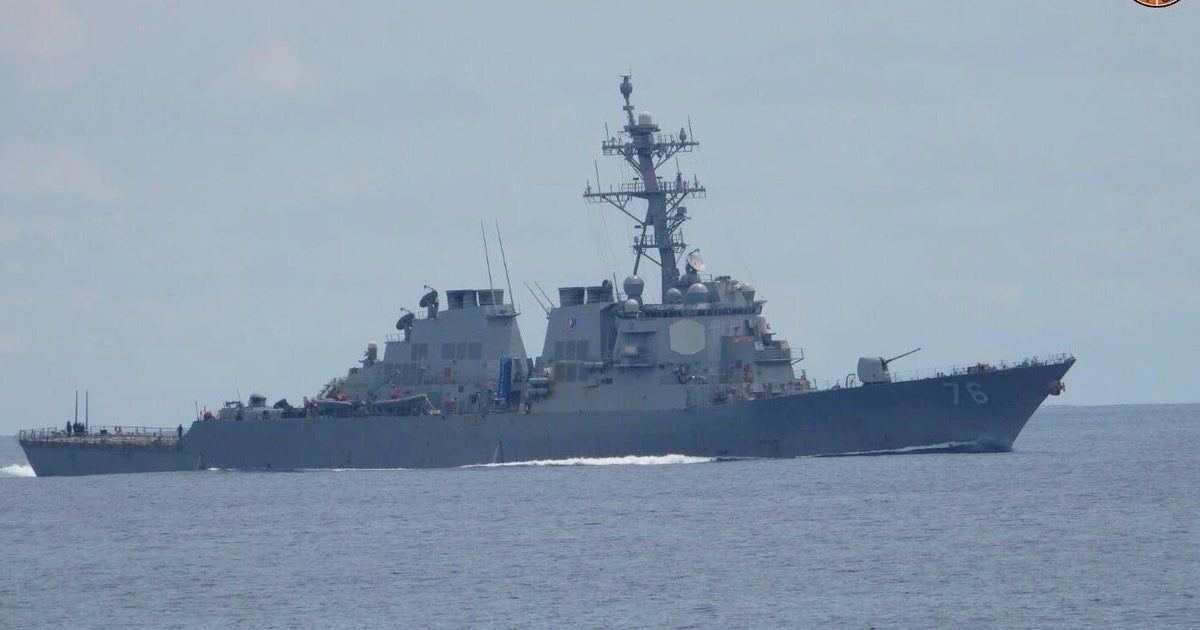
US Navy Dispatches Two Vessels After High-Stakes Collision Near Scarborough Shoal
Although no fresh confrontation was reported, the arrival of American hulls so close to the contested outcrop re-ignites the debate over how far Washington should go in backing Manila against Beijing’s sweeping maritime claims.
What Sparked the Latest Flurry?
The Pieces Now on the Chessboard
| Asset | Type | Distance from Scarborough | Role |
|---|---|---|---|
| USS Higgins | Arleigh Burke-class destroyer | ~30 nm | High-end air & surface defense |
| USS Cincinnati | Independence-class LCS | ~30 nm | Speedy ISR, surface action |
| PLA(N) Escort | Notionally a Type 054A frigate | shadowing 5–7 nm astern | Overt monitoring |
| BRP Teresa Magbanua | Philippine 97-m patrol OPV | within 12 nm of shoal | Law enforcement & SAR standby |
| PAF C-295 | Twin-turboprop patrol aircraft | 8-h sortie loop | Real-time surveillance relay |
Diplomatic Reverberations
Manila quietly thanked the Pentagon for the “routine freedom of navigation patrol,” framing it as reassurance rather than escalation. Beijing’s foreign ministry, meanwhile, lodged a formal protest, insisting the shoal—“part of China’s Zhongsha Islands since ancient times”—should never host foreign military maneuvers.
Six Nations—One Patch of Blue
Overlapping sovereignty assertions:
Looking Ahead
Security analysts warn: each additional hull increases the chance of miscalculation, especially when commanders receive strict “do not yield” instructions. The Scarborough Shoal episode may be contained for now, yet with fishing fleets poised to surge back during the coming calm-weather months, the area remains a tinderbox awaiting the next spark.
US Destroyer Sails Near Scarborough in Defiant Display
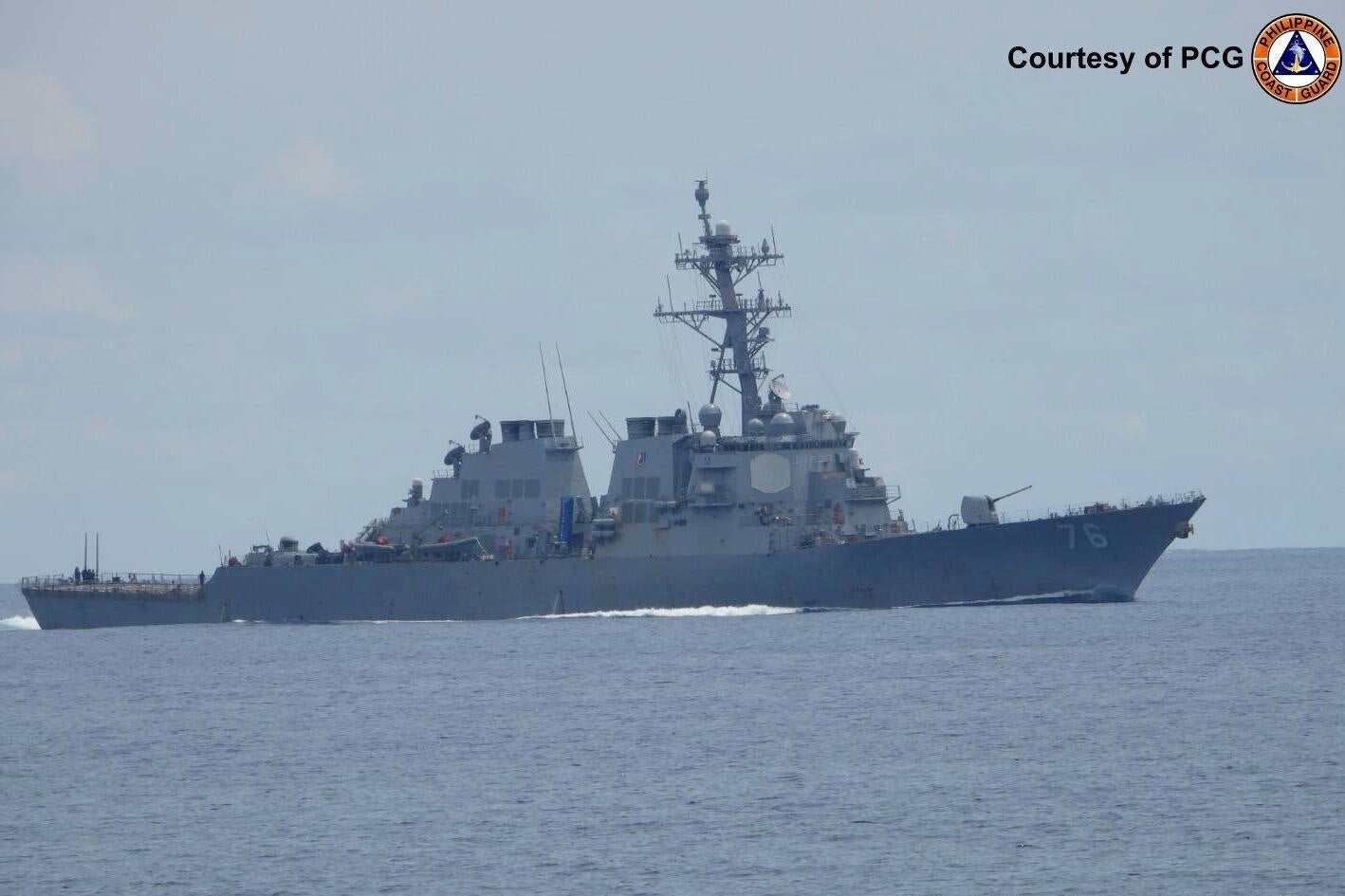
A sleek gray silhouette slices through cobalt waves: on the morning of August 13, 2025, the U.S. Navy destroyer Higgins steamed past the craggy rim of Scarborough Shoal in a carefully choreographed freedom-of-navigation exercise intended to puncture Beijing’s expansive territorial claims in the South China Sea.
Images released by the Philippine Coast Guard show the Arleigh Burke-class vessel slicing through glass-calm waters, her deck-watch team alert beneath an uninterrupted blue sky. The transit sent an unmistakable signal to regional capitals and to Washington itself: the United States remains unwilling to accept any de-facto restrictions on movement through these busy sea-lanes.
Why the South China Sea Still Simmers
- Chinese Notification Demands: Beijing requires foreign warships, aircraft, and even merchant ships to report before sailing through huge swaths of the waterway, a demand rejected by the U.S., its allies, and even some ASEAN states.
- Scarborough Flashpoint: Once a peaceful fishing lagoon, the triangle-shaped reef west of Luzon has become the latest arena for water-cannon duels and radio warnings between Chinese and Philippine coast-guard crews.
- Legal Jiu-Jitsu: Washington asserts the right of “innocent passage” under the United Nations Convention on the Law of the Sea (UNCLOS), a treaty China has ratified but interprets very differently.
Timeline of Recent Tension
- 11 Aug 2025 – Philippine supply boat is blocked by three China Coast Guard vessels; water cannon hoses blast for 20 minutes while Manila’s crew broadcasts distress calls.
- 12 Aug 2025 – U.S. Ambassador MaryKay Carlson tweets a blunt condemnation, calling Beijing’s behavior “reckless” and “a clear violation of safe maritime practices.”
- 13 Aug 2025 – 0700 local – Higgins enters the 12-nautical-mile territorial envelope declared by China around Scarborough while conducting routine deck-gun calibration drills.
- 13 Aug 2025 – 0815 local – Chinese destroyer Hefei shadows the American ship at 1,200 yards, hailing via bridge-to-bridge that the U.S. warship is “intruding into Chinese territorial seas.”
- 13 Aug 2025 – 0840 local – Higgins continues eastward, mission planners noting the transit as “incident-free but closely monitored.”
Potential Domino Effects
Analysts see the latest show of force less as a one-off photo op and more as a harbinger of stepped-up deployments:
- Japan’s Maritime Self-Defense Force may rotate surface action groups through the Philippine Sea this autumn.
- Australia’s incoming destroyer Sydney has already filed voyage plans that skirt the Nine-Dash Line.
- Vietnam is quietly expanding a marine-aviation unit capable of operating from the Spratlys’ reclaimed reefs.
For fishermen who eke out a living from the reef’s teeming banks, the international gunboat ballet is less geopolitics and more simple economics: “Every time the big ships come, we lose a day’s catch,” says Juan Mendoza, captain of a 9-meter Filipino outrigger. “But with Chinese boats blocking us, at least the Americans remind them the world is watching.”
What Comes Next
Neither Washington nor Beijing has hinted at fresh talks; both navies appear to be sharpening routines rather than searching for compromise. Until one side blinks—or diplomacy unexpectedly re-enters the scene—expect more destroyer silhouettes, more coast-guard sirens, and more restless nights for the scattered fishing communities whose livelihoods sit at the heart of the world’s newest maritime fault line.
Washington Eyeing Additional Missile Systems for Manila, USS Cincinnati Stages New Passage
High-Seas Show of Resolve
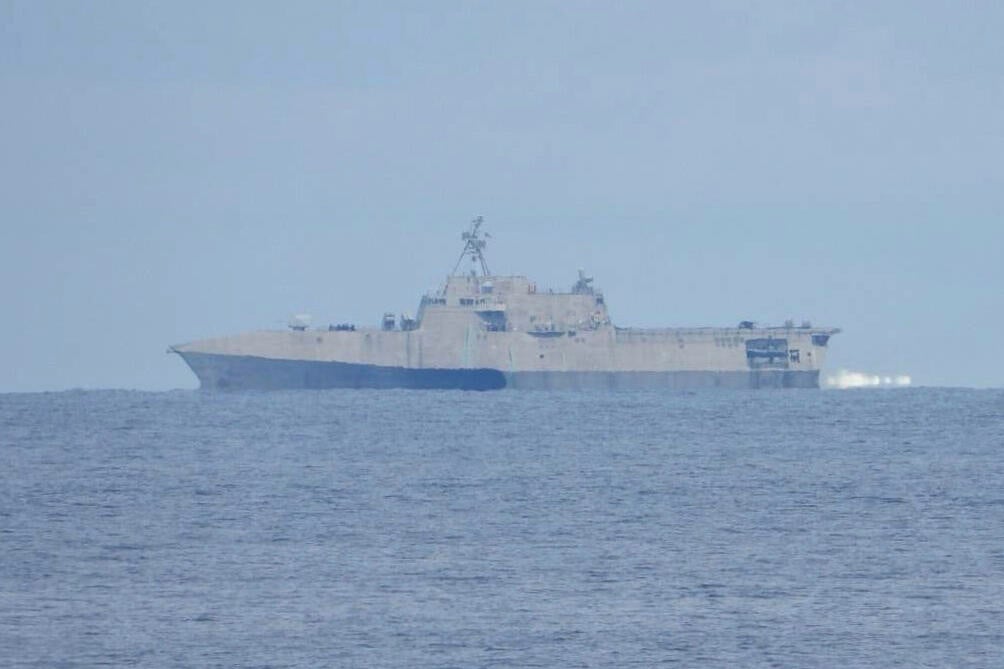
Just off a rocky outcrop claimed by half a dozen governments, the USS Cincinnati (LCS 20) carved a deliberate course early this week as part of Washington’s latest freedom-of-navigation patrol. Philippine Coast Guard imagery released Wednesday captures the trimaran-hulled warship slicing through aqua-blue swells, its battle flag fluttering above an armored helicopter deck. The sail-by—timed to coincide with talks a thousand miles away—came only two days after a dramatic collision between Chinese naval and coast-guard assets and the much smaller BRP Suluan near Scarborough Shoal.
Behind Closed Embassy Doors
While sailors tracked radar returns, negotiators were already huddled at the Philippine Embassy in America’s capital. Ambassador Jose Manuel Romualdez told the Associated Press that Manila and Washington are actively reviewing sites where additional U.S. mobile missile launchers could be based—“not just for the South China Sea, but for the wider Indo-Pacific arc,” he stressed.
- Objectives discussed:
- Rapid reinforcement during gray-zone incidents;
- Extended air- and surface-denial capability around the Philippine archipelago;
- Joint exercises to sharpen integration between allied forces.
- Timeline: No memorandum has yet been drafted; both capitals insist any deployment would be “rotational” and subject to mutual approval.
Monday’s Flashpoint Replay
Footage declassified by the Philippine Coast Guard tells the story frame by frame:
Sequence of Encounter
- The BRP Suluan, a modest 44-meter patrol craft, approached 10.5 nautical miles east of Scarborough on a routine law-enforcement mission.
- Within minutes, a Chinese coast-guard cutter closed in from the starboard quarter, unleashing powerful water-cannon bursts.
- A PLA Navy destroyer abruptly crossed the Suluan’s bow—an action that ended with the steel prow of the destroyer grazing the coast-guard vessel. Metal shrieked and splinters flew; Chinese personnel in orange life-vests staggered at the railing.
- The Philippine ship maneuvered clear; its crew remained unhurt, though the Chinese coast-guard craft sustained visible damage amidships.
Blame Game
Beijing’s narrative: Philippine vessels “intruded” into what Chinese authorities labeled sovereign waters, ignoring verbal and radio warnings. A spokesperson for the China Coast Guard, Gan Yu, accused Manila of “provocative behavior that jeopardizes maritime order.”
Filipino leaders’ response: Senators and defense officials lined up on Thursday to demand that Beijing “observe the very rules it once helped draft” under the United Nations Convention on the Law of the Sea.
Forward Momentum of an Old Alliance
The Philippines may be an archipelago of 7,641 islands, but its strategic weight is magnified by a 73-year-old defense treaty with Washington—the longest-standing alliance in East Asia. Under that pact, a single armed attack on Filipino sailors or soldiers can trigger U.S. military support. The mere prospect of new American missile batteries on Philippine soil “sends an unmistakable signal”, according to maritime analysts: the rules-based order is not open for renegotiation at the barrel of a water cannon.
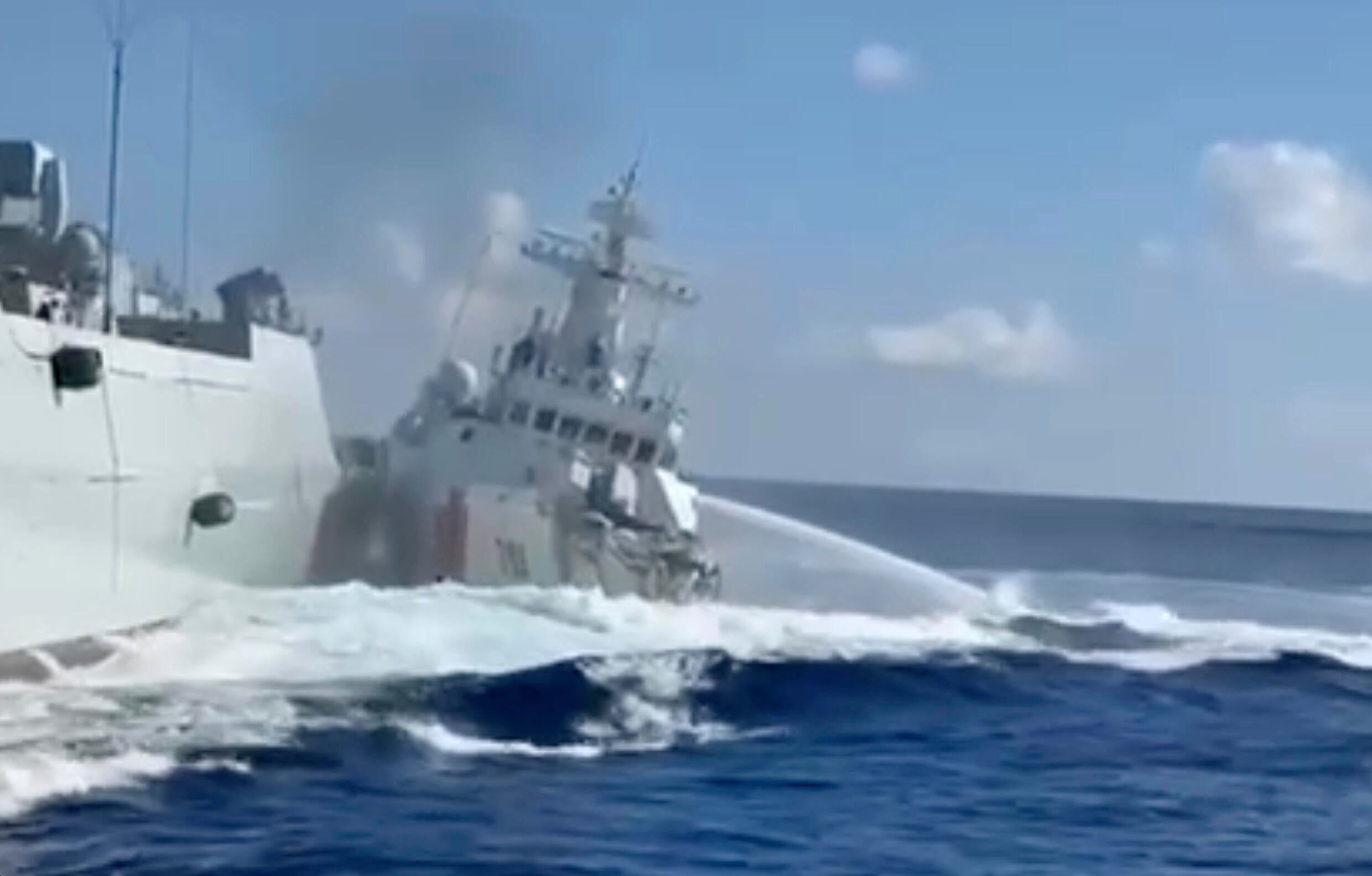
Chinese Maritime Assets Collide While Pursuing Philippine Patrol in South China Sea
Fresh footage from Manila shows a remarkable sequence in which a Chinese Coast Guard cutter careened into a People’s Liberation Army Navy escort ship while both attempted to block a routine Philippine patrol near Scarborough Shoal on 11 August 2025. The impact stripped the bow from the larger coast-guard vessel and left a long, angular gash in the navy ship’s flank, according to imagery released by the Philippine Coast Guard (PCG).
What the Video Reveals
- Missing crew. Moments after impact, decks that moments earlier had been crowded with uniformed personnel were suddenly empty.
- Catastrophic damage. The forward third of the white-hulled coast-guard boat crumpled like tin; the gray naval hull bore parallel scars consistent with a high-force scrape.
- Lone survivor. The targeted Philippine patrol boat continued on course, seemingly unscathed.
Regional Powers React
Tokyo, Canberra, Wellington Sound the Alarm
Within 24 hours the foreign ministries of Japan, Australia, and New Zealand issued coordinated condemnations.
Japan: “Any action that heightens risk in these waters undermines both regional stability and the global economy. We call on all States to act strictly within international law,” Ambassador Endo Kazuya stated on X.
Australia: “The conduct of Chinese vessels was plainly unsafe and unprofessional,” the embassy in Manila declared, urging “immediate de-escalation and full compliance with COLREGS.”
New Zealand echoed calls for restraint and underscored that freedom of navigation is “non-negotiable.”
Manila Paints Incident as Inevitable Result of ‘Dangerous Games’
Speaking to reporters, PCG Commodore Tarriela noted that Manila had repeatedly warned Beijing to abandon so-called “risky blockades” that flout international collision rules.
Key takeaway from Tarriela’s briefing:
- “For five years we’ve stated the obvious—play these manoeuvres long enough and physics will win.”
His words were delivered scant hours after a separate aerial encounter: a Chinese fighter barrel-rolled within 150 m of a much smaller Philippine patrol aircraft carrying journalists above Scarborough, sustaining hazardous proximity for roughly twenty minutes.
Both episodes—the maritime collision and the close-call overflight—are likely to dominate this week’s ASEAN maritime security talks, with smaller claimant states leaning on Beijing to resume long-stalled Code of Conduct negotiations.