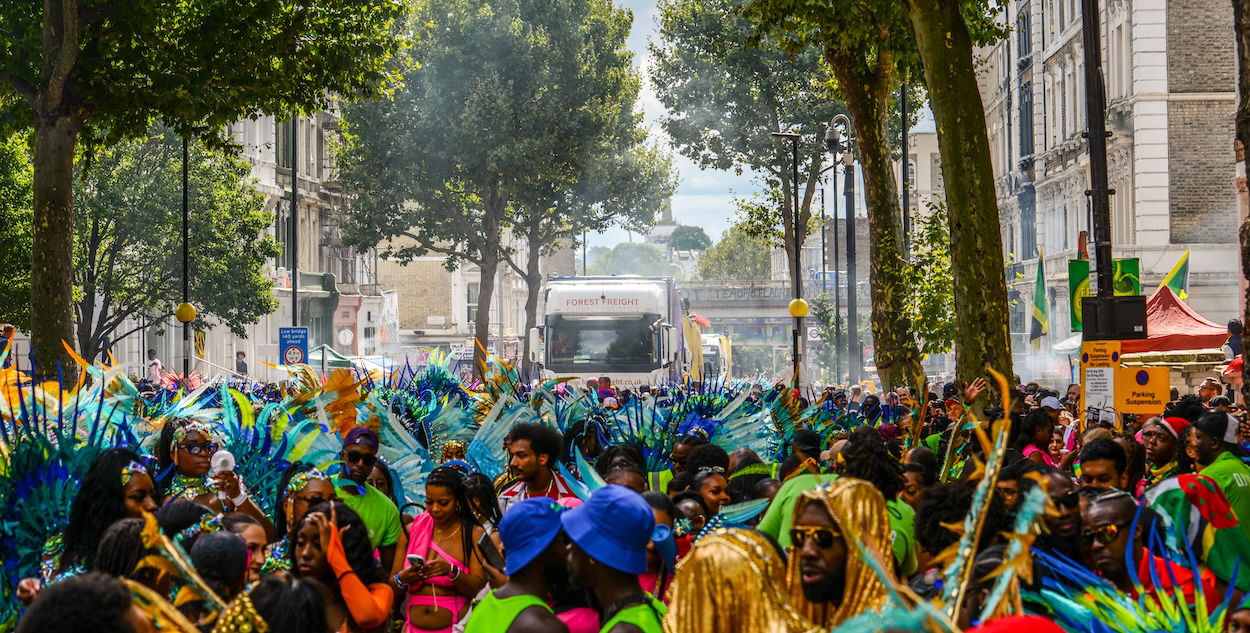
Live Facial Recognition at Notting Hill Carnival
Every August Bank Holiday, Notting Hill turns into Europe’s biggest street party – and, to put it simply, a policing nightmare. This year the Metropolitan Police is rolling out live facial recognition (LFR) on a scale that’s never been seen before. The pitch? A gadget that spots crooks in real time without bias – no race, gender, or age discrimination. The reality? A tangled mess of contested science, high stakes, and a festival that regularly witnesses murders, stabbings, and assaults.
What’s the Big Deal?
- Bias or Cost? There’s a debate on whether mis‑flagged suspects are a sign of racial bias or just an unavoidable cost of catching real criminals.
- Safety vs. Culture London residents bite the bullet to keep the festivities safe, but at what price for their cultural pride?
- The Numbers How many violent crimes are we willing to tolerate every August Bank Holiday just to keep the carnival alive?
Live Faces: The Promises
The police promise that the new system will:
- Scan faces on the fly during the carnival
- Match them against a criminal database instantly
- Operate without favoritism toward any demographic group
Reality Check
The science behind LFR isn’t settled. Critics point out:
- Studies show it can wrongly flag innocent people, especially from minority backgrounds.
- Accuracy drops when crowds are dense—exactly where Notting Hill Carnival thrives.
- Historical data reveals that the police have already been misreading potential suspects.
Why Does This Matter?
It’s not just about tech hype. It’s about public trust. People wonder whether policing with cameras that can hallucinate faces is a step toward a safer carnival or a slippery slope of surveillance.
Looking Ahead
As the Met gears up to deploy LFR, the festival’s organizers, local communities, and data scientists are all watching closely. The question isn’t only whether the tech works but whether it’s adding to the carnival’s spirit or eroding it. The August Bank Holiday will once again test the balance between culture, safety, and the limits of technology.
What is LFR?
Live Facial Recognition: The Good, the Bad, and the “Oops” Moment
What’s the Buzz About?
Picture this: a crowd at a concert, a busy train station, or a marathon. Cameras around every corner start scanning faces in real time, and the system cross‑checks each sighting against a list of folks law‑enforcement keeps on their radar. Unlike old‑school CCTV that just makes a video tape, Live Facial Recognition (LFR) is a proactive sidekick that flags potential threats on the spot.
Why People Are Raising Their Voice
- Mis‑identification – The system can get a little sloppy, flagging innocent people or missing the real target.
- No Random Error – These slip‑ups aren’t evenly spread; they hit certain groups harder.
- Systemic Bias – A bunch of studies have found that women, older folks and ethnic minorities face higher error rates. The tech mistakenly thinks they’re all “almost identical.”
The Science Behind the Hiccups
Researchers have shown that LFR struggles when faces share similar features. Think of a bunch of actors from the same drama—if they all look alike, the software gets confused. That’s why error rates climb for some of the very people who might be most vulnerable to being unfairly targeted.
Bottom Line
Live Facial Recognition gives a stealthy edge to police work, but it’s a double‑edged sword. Its speed and predictiveness are powerful, yet the glitches could lead to real‑world consequences—especially for the groups most likely to be misidentified. The challenge? Making the tech smarter and fairer before we let it run the show.
Most Read on Euro Weekly News
 “>
“>
UK bank checks on transfers, set to cause expat headache
 “>
“>
UK Facial Recognition Gamble: Safety first, science later?
 “>
“>
Stargazing in a man’s world
The study at the centre of the row
Met’s Fingerprint Dilemma
The 2023 Report
According to a study from the National Physical Laboratory, the Met’s fingerprint system is “unbiased” at a sweet spot of 0.64 sensitivity. In other words, the math checks out—no glaring bias, all good.
Professor Pete Fussey’s Caveat
Professor Pete Fussey, a leading voice on UK surveillance, says that the whole claim sits on a rock‑solid… well, tiny data set—only seven false matches. He’s pointing out that a sample that small could be a statistical hiccup rather than a reliable verdict.
What the Numbers Really Look Like
- 400 volunteers participated
- Study duration: 34.5 hours
- Only 7 false matches counted
Policing Reality: A Drop in the Ocean
In a world where law enforcement operates on massive databases and cases piled up like paperwork, 34.5 hours of testing feels more like a warm‑up than a marathon. So the big question remains: does the system hold up when thrown into the real‑world chaos of policing?
The Unfair “Bias” Narrative: The trade-off no one admits
When Facial Recognition Gets Too Friendly (or Unfriendly?)
Picture this: a camera that spots everyone walking by—except it’s more like a wild net than a tight fishing line. That’s what happens when the threshold for facial‑recognition tech is set too low. You’ll end up with a runaway list of “suspects” that often misfires on women, the elderly, and minorities. Sounds like a bias‑riddle, right?
Why We’re Chill About Mistakes in Medicine and Audits
- Heart disease tests, cancer screenings, or even accountant audits usually accept some misfires. A blood test that’s 90 % accurate might still give a few false alarms, but that’s just the nature of catching the ones that matter.
- There’s no fuss that a blood test is “biased” against men for turning up false positives—just a trade‑off between safety and noise.
- Similarly, an audit flagging an innocent bank transaction lets the system keep scanning the wild, so it’s not the end of the world.
Hold My Hush‑Hush, Now It’s “Bias” Time!
Come the moment you’re talking about actual crime—murders, robberies, and even terror plots— the language flips on its head. We switch from “this test’s false‑positive rate” to “is this system biased?” Suddenly it’s not a numbers game; it’s a moral philosophy showdown. Questions like “Will it unfairly flag people of a certain color?” pop up, and people start calling the whole thing a political glitch.
The Mismatch Between Accuracy and Alarm
- Raise the threshold → fewer false alarms, but you run the risk of missing real threats. That could mean letting a real robbery slip through or, worse, a murder case slide under the radar.
- The Metropolitan Police claim they’ve hit the sweet spot—“bias‑free” in theory.
- Reality check: they haven’t tested those claims on the massive scale needed for London—and the entire UK—so talk of a bias‑free finish might be a bit too optimistic.
Bottom line: the risk is two‑fold. Either you shoot the wrong people (and that feels unfair on the surface) or you miss the real bad guys (and that feels like your safety was compromised). Finding the right balance isn’t just a technical issue—it’s a societal one we all need to keep honest.
The bigger picture
London’s Security Saga: More Than Just Firearms
Before the carnival, the Met Police made a broom‑full of surprises, snatching up 11 guns and a who’s‑who of knives – over 40 in total – and locking up over 100 suspects. It was a tidy operation that left the city breathing a little easier… but not without raising a few eyebrows.
Speed, Power, and an Algorithmic Edge
- Speed: The police moved fast, like an espresso shot before a marathon.
- Efficiency: Every swep/take was precise, a well‑tuned orchestra of gear.
- Deterrence: The spectacle sent a clear message: “No fun, no weapons.”
- Uncharted Algorithms: Those predictive models? They’re the new black‑hat tech: swift, unseen, and mostly unexamined.
Where Risk Meets Convenience
The heart of the matter isn’t whether the approach works – it does, hands‑on. The real question is: How much gray area are we willing to accept in the name of safety?
- Trading Neutrality: Are London’s citizens comfortable swapping the uncertain promise of algorithmic fairness for the tangible reassurance of security?
- Proof, Who’s On It? In this debate, the critics are handed the heavy burden of proof, while the state waltzes by with low‑visibility claims.
The One‑Two Punch: Facts & Opinions
There are valid arguments on both sides. On one hand, fewer guns mean fewer tragedies. On the other, the weight of uncontrolled algorithmic power sits patiently on our shoulders. It’s a tough line between protecting people and preserving trust.
Closing Thoughts
London’s road to safer streets is a high‑stakes journey, asking us to juggle safety, trust, and clarity. Will the city embrace speed, or will the shadow of algorithmic uncertainty loom larger than sweeping instruments? The conversation is wide open – and we’re all invited to weigh in.
The crime question the Notting Hill Carnival cannot ignore
Notting Hill Carnival 2025: The Graphic Cost of Europe’s Biggest Street Bash
When a Million‑Strong Crowd Turns into a Police‑Intensive Operation
Every Bank Holiday, the narrow streets of Notting Hill transform into a vibrant carnival that can host up to 2 million people. But amid the music, costumes, and dancing, law‑enforcement is pulled in like a second act.
2024 – A Report Card of Hard‑Hit Numbers
- 2 murders and 7 non‑fatal stabbings – a grim headline.
- 349 arrests in total, broken down into:
- 72 for offensive weapons
- 13 for sexual offences
- 53 assaults on emergency workers
- 61 assaults on police officers
Leading Up to 2025 – The Met’s Pre‑Fight
- 100 arrests made from intelligence‑driven operations.
- 21 people sent back to prison.
- 266 people were barred from attending the carnival.
- Firearms confiscated: 11 guns.
- More than 40 knives seized.
During the Carnival Weekend – The Live‑Action
By Sunday evening, the police had pulled 140 people in. Interestingly, 13 of those were flagged by live facial‑recognition alerts as they approached the venue. That’s tech that’s catching crimes before they even happen.
A World‑Class Festival, but A World‑Class Fight
The sheer scale of Notting Hill’s street carnival is awe‑inspiring, but the numbers from 2024‑2025 paint a sobering picture. All that music and dance comes with a cost: a strong, sometimes aggressive, police presence to keep everyone safe. It’s a bit of a double‑edged sword, but one that keeps the carnival from turning into an unsafe spectacle.
What residents report.
Weekend Lock‑In: A Community Lock‑Down Parade
Local households and traders have turned the weekend into a sort of unofficial lock‑in—think of it as a communal “no‑entry” zone, but with a lot more crowbars and confusion.
What’s Happening in the Neighborhood
- Boarded‑Up Front Doors: Residents are slapping plywood over windows and doors, praying that the burglars stay indoors with their nostalgia for past crime rates.
- Business Shutters: Some shops report a temporary “closed” sign, because they’re not ready to let anyone in on their well‑kept inventory.
- Streets Overwhelmed: Community groups describe roads as the “new epicenter of chaos,” where traffic feels like a frantic accordion of honks and hesitation.
Perspectives Not Numbers
While these observations aren’t backed by official statistics, they’re all over the area and nigglingly consistent—so you can’t dismiss them as a trick of the mind.
Feel the Pulse
From the cautious tone of the city council to the chuckles of a local barista who’s televised his own “slide‑free” coffee trick, everyone’s feeling the intensity in the same way—like a communal game of “keep out, keep out, keep out.”
What the police response tells us.
Police Pull Out the Big Guns: Nearly 7,000 Officers on Scene
Picture this: a city buzzing with excitement, the air electric, and someone drops a line, “We’ve got almost a full‑blown army of officers on duty.” Yep, the numbers show nearly 7,000 officers have been mobilized this year—more than any single event has seen before.
What That Really Means (And Why It’s Not Just a Parade)
- Massive show of force – The sheer scale signals organizers that this isn’t a minor, local jamboree; it’s a high‑stakes gathering that could easily spiral if not handled properly.
- No sub‑parting needed – It’s not merely a quick “let’s have a little fun.” The guards are there for a reason: to keep the crowd in check and prevent a chaotic breakout.
- Big danger, big belt – With big resources come big expectations. If the crowd gets out of line, without those extra hands, control could tip into a mess.
The Quiet Signs That Things Might Turn Out
Layer after layer of officers means the organization is signaling a few things:
- They’re anticipating possible disorder and are ready to act fast.
- The event is important enough that any slip could lead to a media frenzy.
- There’s a battle plan that balances safety with the vibes of the crowd.
Bottom Line
So, when you hear “7,000 officers in the mix,” stay tuned. It’s less about flashy theatrics and more about keeping the sugar‑coated chaos at bay, letting the event sparkle without turning into a full‑blown crisis.
What the media tend to gloss over: Context without excuses.
Notting Hill Carnival: A Reality Check
On paper, the arrest numbers for Notting Hill Carnival look pretty ordinary—similar to other large festivals. But that comparison is a bit of a trick.
Events like Glastonbury, Reading or Wembley almost never see murders or multiple stabbings in a single weekend. Firearm arrests are practically zero, and sexual assaults are far less common.
What Makes Notting Hill Different?
- Serious Violence: murders, knife attacks, rapes, police assaults, and looting.
- All of this happening inside a tight residential neighbourhood.
- Police must stand guard on the front lines.
This is the hard truth that many policymakers, media outlets and intellectuals prefer to sidestep.
The Policy Dilemma
Suppose the carnival stays in its current spot. How much risk can the community inadvertently absorb each year? If it moves or tightens controls, what does that cost to the carnival’s authentic vibe and accessibility? Culture matters. Safety matters even more. The decision isn’t a political statement—it’s a matter of facts.
Decisions should be guided by:
- Arrest figures
- Hospital admissions
- The number of officers needed to maintain order
Only by crunching these real numbers can we find a solution that balances the carnival’s spirit with the well‑being of the neighbourhood.
The hard choice ahead
The Big Question: Can We Actually Move Past the “Carnival” Conundrum?
No longer is the debate just about whether face‑recognition tech does what it promises. The core of the issue is whether London – and the rest of the UK – can stand up and face the raw truth behind the Carnival.
Policymakers love tweaking algorithms: bump the thresholds, add new filters, make “sorry” messages hotter. But the real choice is brutal: how much danger are we willing to keep on the name of tradition and festivity, without really looking at the deeper roots of the problem?