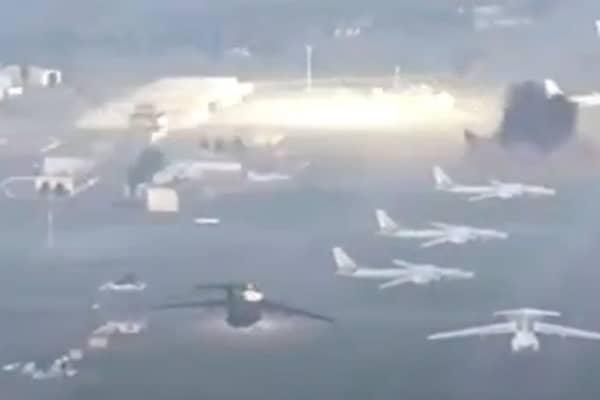
Operation Spiderweb: A Modern-Day Airfield Catastrophe
Ukraine rolled out the “Spiderweb” strike on June 1, 2025, and the outcome was nothing short of a cinematic tragedy – 7 billion dollars of Russian “combat‑ready” aircraft turned into a blazing fireworks display.
What Went Down
- 117 FPV drones launched from inside Russian territory.
- Five airbases were hit – shrapnel, orange flames, and the roar of kerosene exploding.
- Approximately one‑third of the strategic bomber fleet was destroyed or severely damaged.
- Details from Aviation Analyst Valerii Romanenko: “These were fully fueled, combat‑ready jets. Each strike lit an orange inferno, a massive plume of smoke and a long column of fire.”
Why It Matters
Putin’s “strategic aviation” is feeling the heat. Here’s why:
- Only a single squadron survives “Mos
- Three‑quarters of Russia’s core cruise missile carriers are now damaged.
- Large bombers (like the Tu‑95MS) and older jets (the Tu‑22M3) are far from the new operational nest and unlikely to launch massive strike missions again.
- Even the one Kh‑22 missile launched recently is a distant, almost‑forgotten threat.
Reporter’s Take
“Even though the numbers were smaller than expected, losing about 13 heavily armed, fully‑fueled aircraft is a hard hit to any military’s morale,” Romanenko noted. “It’s the best thing we can hope for in trying to deter future large‑scale Russian attacks.”
Final Word from SBU
According to Head Vasyl Malyuk: “We’ve inflicted a crushing blow on Russia’s strategic flight capabilities, marking a definitive ‘slap’ against the nation’s power and terror tactics.”
Stay tuned for real‑time updates and witness how this high‑altitude drama reshapes the battlefield.